




Pereira, the Most Diverse and Beautiful City in Colombia
Between páramo and cloud forest, warm all year round: what makes Pereira one of the best bases for living in Colombia.

Equipo Mister Fox
July 9, 2021 · Updated on July 30, 2026 · 5 min read
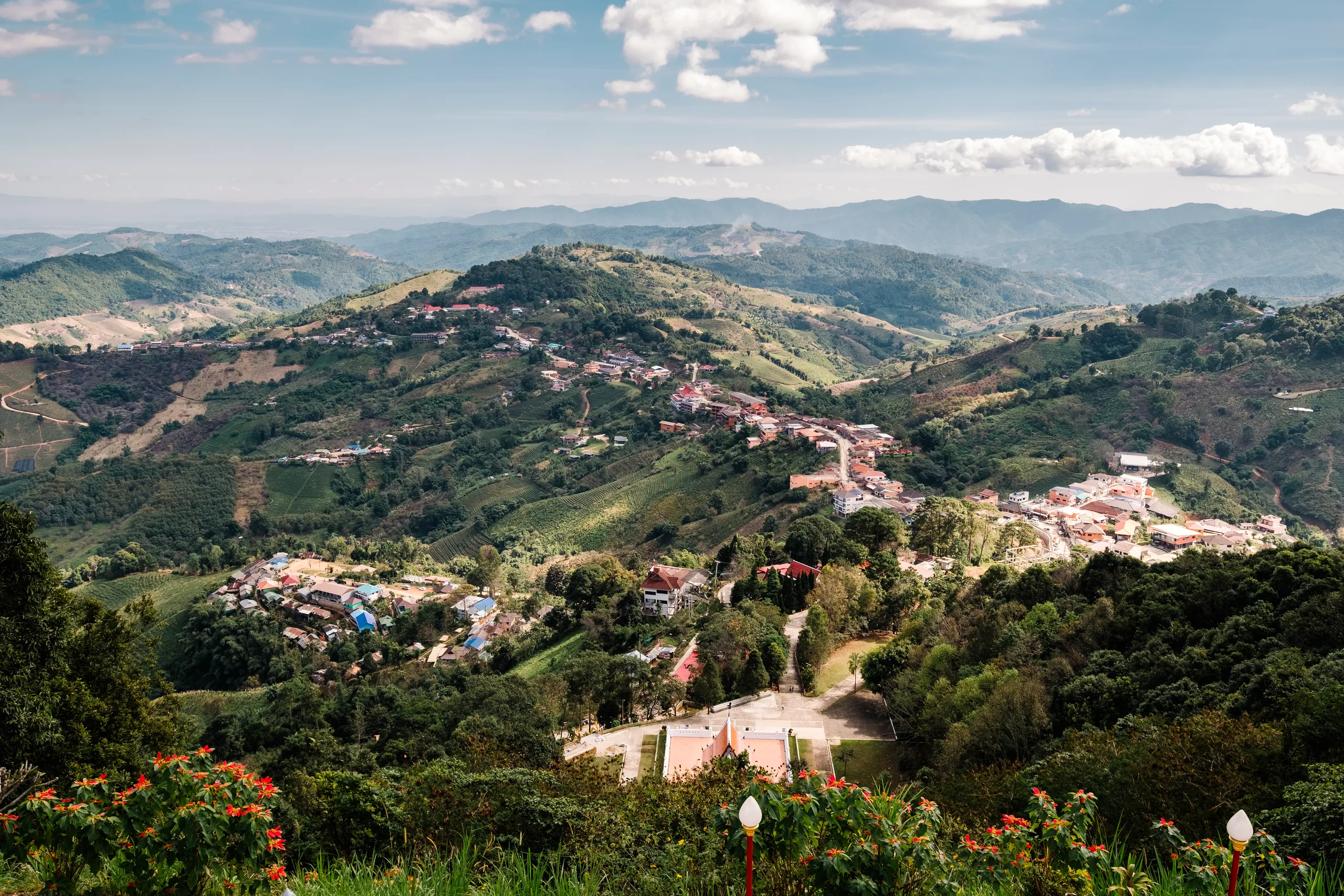
Some cities make sense from the centre outwards, and others only make sense once you look around them. Pereira belongs to the second group. In under two hours you go from a busy avenue to a cloud forest, and from there to the edge of the snow line. That closeness between different worlds is what defines the place.
Where it is, and why people struggle to place it
Pereira is the capital of Risaralda and the midpoint of the triangle formed by Bogotá, Medellín and Cali. Together with Dosquebradas and La Virginia it makes up a metropolitan area that functions as a single city, joined by the César Gaviria Trujillo viaduct.
It sits at around 1,400 metres, which gives it warm weather all year with afternoon rain that arrives on time and leaves quickly. Matecaña airport is inside the city, fifteen minutes from the centre, a detail that spares you the hour-long transfer other Colombian airports demand.
Diverse in the most literal sense
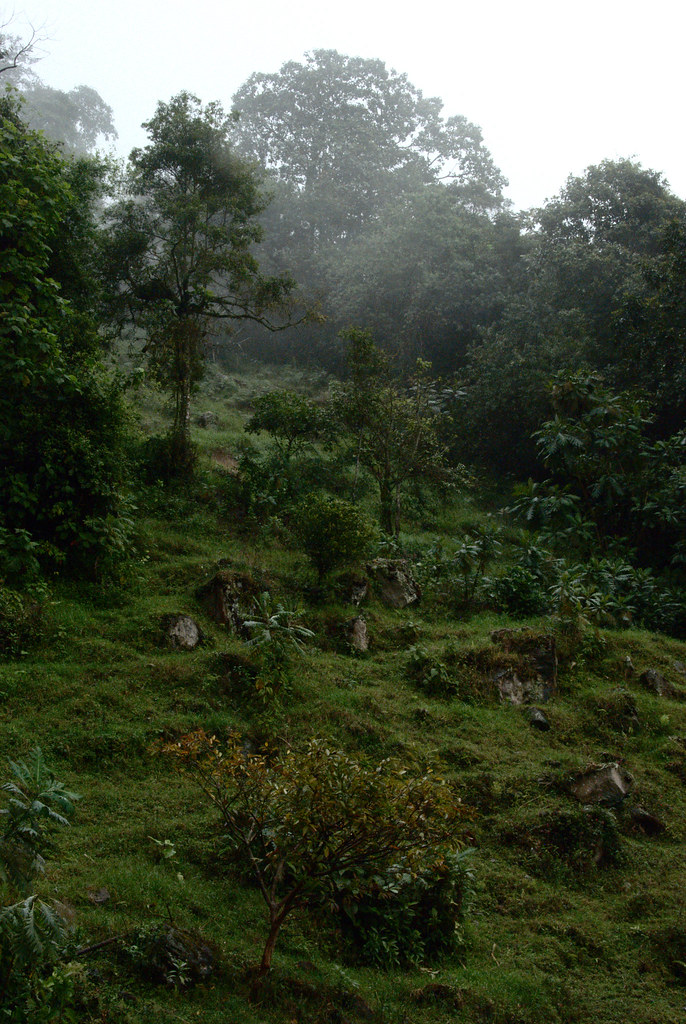
The word diversity gets used a lot and explained rarely. In Risaralda it has a measurable meaning: the department runs from the Cauca river valley, in hot lowland country, up to the snow peaks of Los Nevados national park. Between those two extremes you find sugar cane, coffee slopes, cloud forest and páramo.
That makes the area a serious birdwatching destination. Colombia has more recorded bird species than any other country, and nearby reserves such as Otún Quimbaya hold a good share of them less than an hour from central Pereira. You do not need to be an expert. Getting up early and borrowing a pair of binoculars is enough.
The Coffee Cultural Landscape
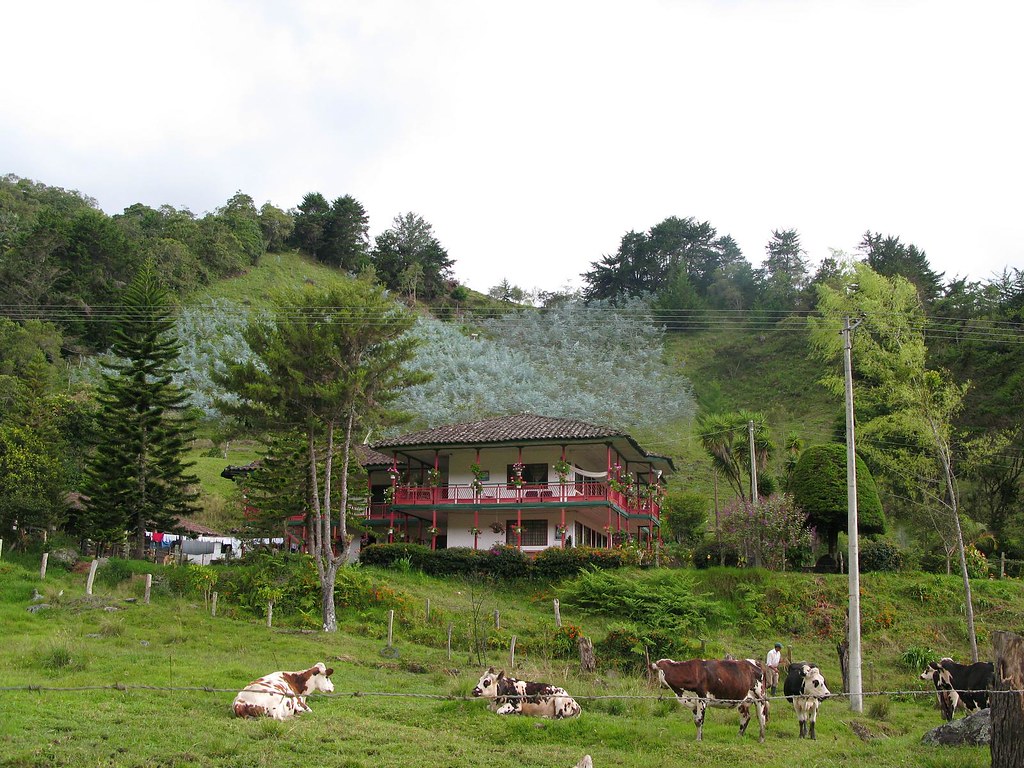
In 2011, Unesco added the Coffee Cultural Landscape of Colombia to its World Heritage list. It covers parts of Risaralda, Quindío, Caldas and Valle del Cauca, and what it recognizes is not only the scenery but a way of life: small farms, hillside cultivation and an architecture of bahareque houses with wide corridors and strong colors.
For a Spanish student this has a practical upside. Coffee farm tours run in Spanish and come with vocabulary no textbook includes: trilla, secado, tueste, catación, chapolera. It is a three-hour lesson dressed up as a day out.
The city up close
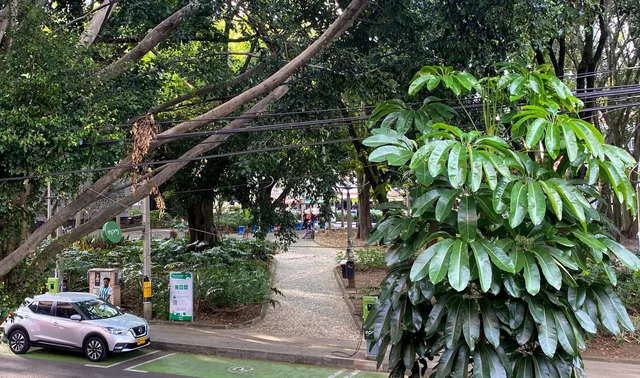
Plaza de Bolívar holds the Bolívar Desnudo by Rodrigo Arenas Betancourt, probably the most argued-about statue in the country and a reliable way to start a conversation with a local. Around it, Parque El Lago and Parque La Libertad work as the city's living room.
Avenida Circunvalar concentrates the restaurants, bars and specialty coffee shops. And with four large universities, among them the Universidad Tecnológica de Pereira, there are more young people around than a city this size would normally hold, which shows up in the cultural calendar and in the prices.
The local nickname sums it up better than any description: la ciudad sin puertas, the city without doors. It refers to a character that is talkative and direct, short on ceremony and quite happy to join a conversation it was not invited to.
What to eat
- The menú del día, which handles lunch for very little: soup, a side dish, protein, rice, salad and fresh juice.
- Chorizo santarrosano, from Santa Rosa de Cabal, eaten with arepa and lime.
- Bandeja paisa, best kept for a day with nothing planned afterwards.
- Fruit that does not exist further north: lulo, granadilla, mangostino, guanábana, feijoa.
- Obleas with arequipe, which turn up on any corner in the mid-afternoon.
Weekend trips
| Destination | Approximate distance | What is there |
|---|---|---|
| Santa Rosa de Cabal | Half an hour | Hot springs, waterfalls and the region's best known chorizo |
| Salento and the Cocora Valley | Just over an hour | Wax palms, walking trails and a village painted in every color |
| Otún Quimbaya reserve | About an hour | Cloud forest and birdwatching |
| Parque del Café and Panaca | Around an hour | Theme parks, a solid plan with children |
| Los Nevados | Half a day | Páramo and high mountain, with a guide and acclimatization |
What living here is like
The cost of living sits clearly below Medellín or Bogotá, and the scale of the city helps: almost everything is fifteen minutes away, so very little time disappears into commuting. In exchange, there are fewer coworking options than in the big cities, so check the connection at your accommodation before signing anything.
On actual prices, the sensible move is to check the market when you travel. Always ask whether building fees and utilities are included, and bear in mind that the gap between a yearly contract and a furnished weekly rental is enormous.
Learning Spanish in Pereira
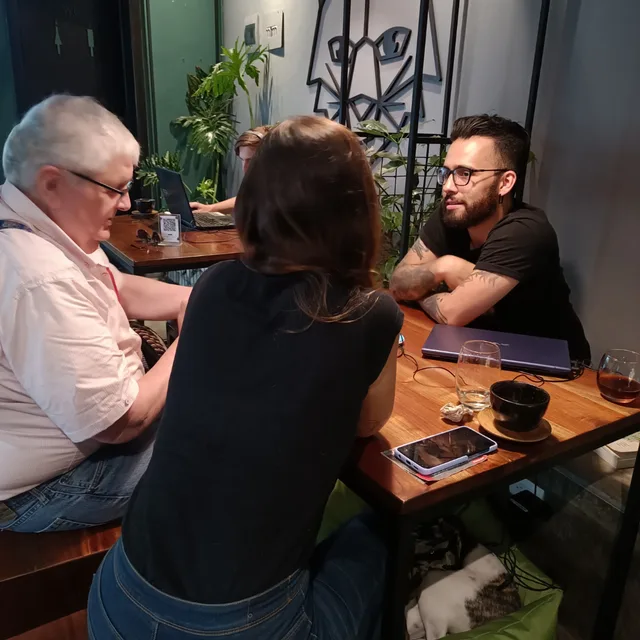
Here is the advantage no tourist guide mentions: outside a handful of places, English does not circulate. Ordering lunch, renting a flat or asking for directions become compulsory exercises, and that daily friction is exactly what moves you forward. Of the Colombian cities with language schools, this is where Spanish improves fastest.
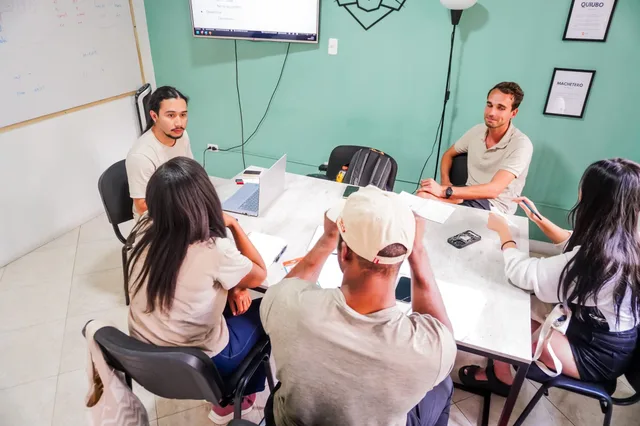
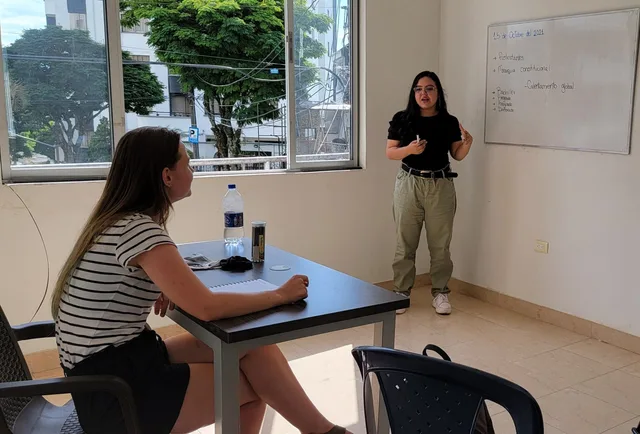
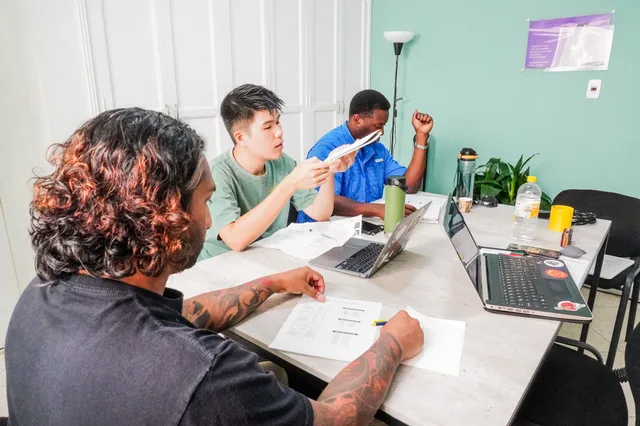
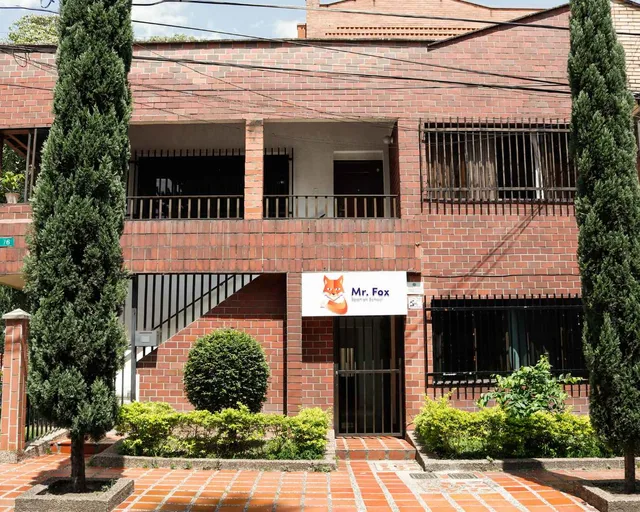
Our campus is in central Pereira. The routine that works best is the simplest one: class in the morning, city in the afternoon, so that whatever you practise in the classroom gets used the same day.
Few cities let you have breakfast in the tropics and lunch looking out at the páramo. That is the real diversity of Pereira.
Before you come
If you are considering a season in the coffee region, set your class schedule before your accommodation: choosing a neighborhood is far easier once you know where you need to be each morning. Tell us your dates and your level and we will let you know which slots are open.
New students start with a 30-minute trial class, with no commitment.
Learn Spanish with us in Colombia
Mister Fox Spanish School is a licensed school (ETDH) with campuses in Pereira and Medellín (Laureles and Belén): small groups, real teachers and a free trial class.
Recent articles
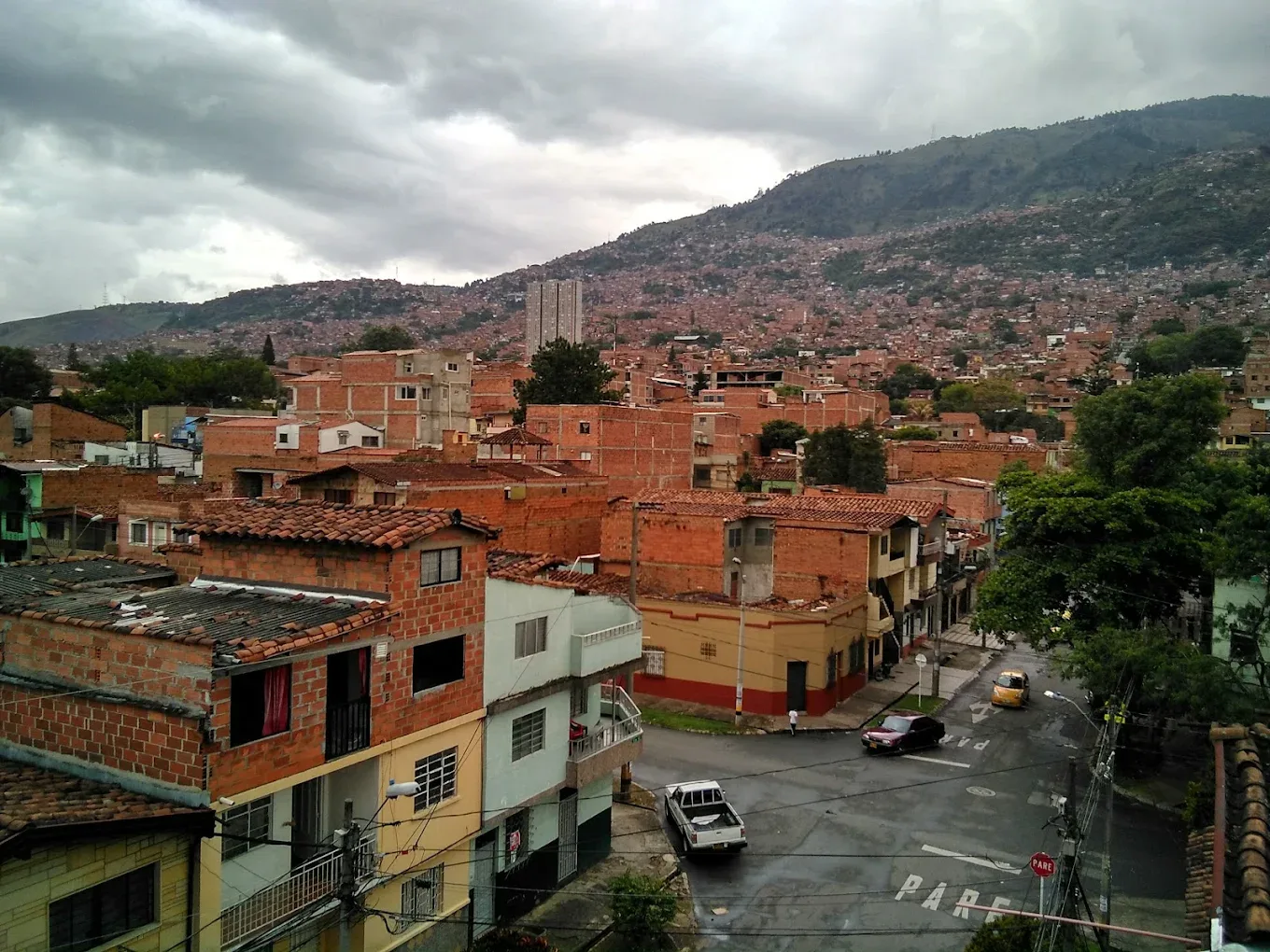
Beyond the Tourist Trail in Medellín: Real Neighborhoods, True Living Costs, and How to Settle In Like a Local
Discover where real medellinenses live, actual living costs by neighborhood, and how to integrate as a genuine resident, not just a tourist.
August 24, 2026 · 5 min read
25 Spanish phrases you'll actually use in your first week in Colombia
From ¿Qué más? to a la orden: the phrases you will really hear on day one in Colombia, with translations and tips to use them like a local.
July 2, 2026 · 4 min read
The best time to move to Medellín or Pereira (weather, festivals, timing your course)
Eternal-spring weather, rainy seasons, the Feria de las Flores and visa timelines: how to pick the right month to start your Spanish course in Colombia.
June 25, 2026 · 4 min read