




Colombian Coffee, a Language of Export Quality
Tinto, chapolera, cupping, clean cup: the vocabulary of Colombian coffee and why a farm visit is a Spanish lesson in disguise.

Equipo Mister Fox
June 24, 2021 · Updated on July 30, 2026 · 5 min read
You order a coffee in Pereira and they ask whether you want it tinto or perico. You say yes to everything and something unexpected arrives. Colombian coffee has a vocabulary of its own, and learning it does two things at once: it lets you order properly and it drops you into the most common conversation in the country.
Start with the cup
Before the farms and the processing, there is what you will order tomorrow on the corner. This is the minimum vocabulary, and it has almost nothing in common with a European café.
| What you order | What arrives |
|---|---|
| Un tinto | Small black coffee, usually already sweetened. Nothing to do with wine |
| Un perico or pintadito | Small coffee with a splash of milk |
| Un café con leche | A larger version of the above, almost always in a mug |
| Un capuchino | What you expect, though the size varies wildly |
| Un aguapanela con queso | Panela dissolved in hot water, no coffee, with cheese in it |
One useful note: if someone offers you a tinto in an office, a shop or their home, accepting is part of the social protocol. Turning it down is not a problem, but accepting opens conversations.

What Colombia produces, precisely
It is worth being exact here, because a lot of loose claims circulate. Colombia is not the world's largest coffee producer: Brazil and Vietnam produce more volume. What Colombia has been for decades is the world's largest producer of washed arabica, the category associated with quality rather than quantity.
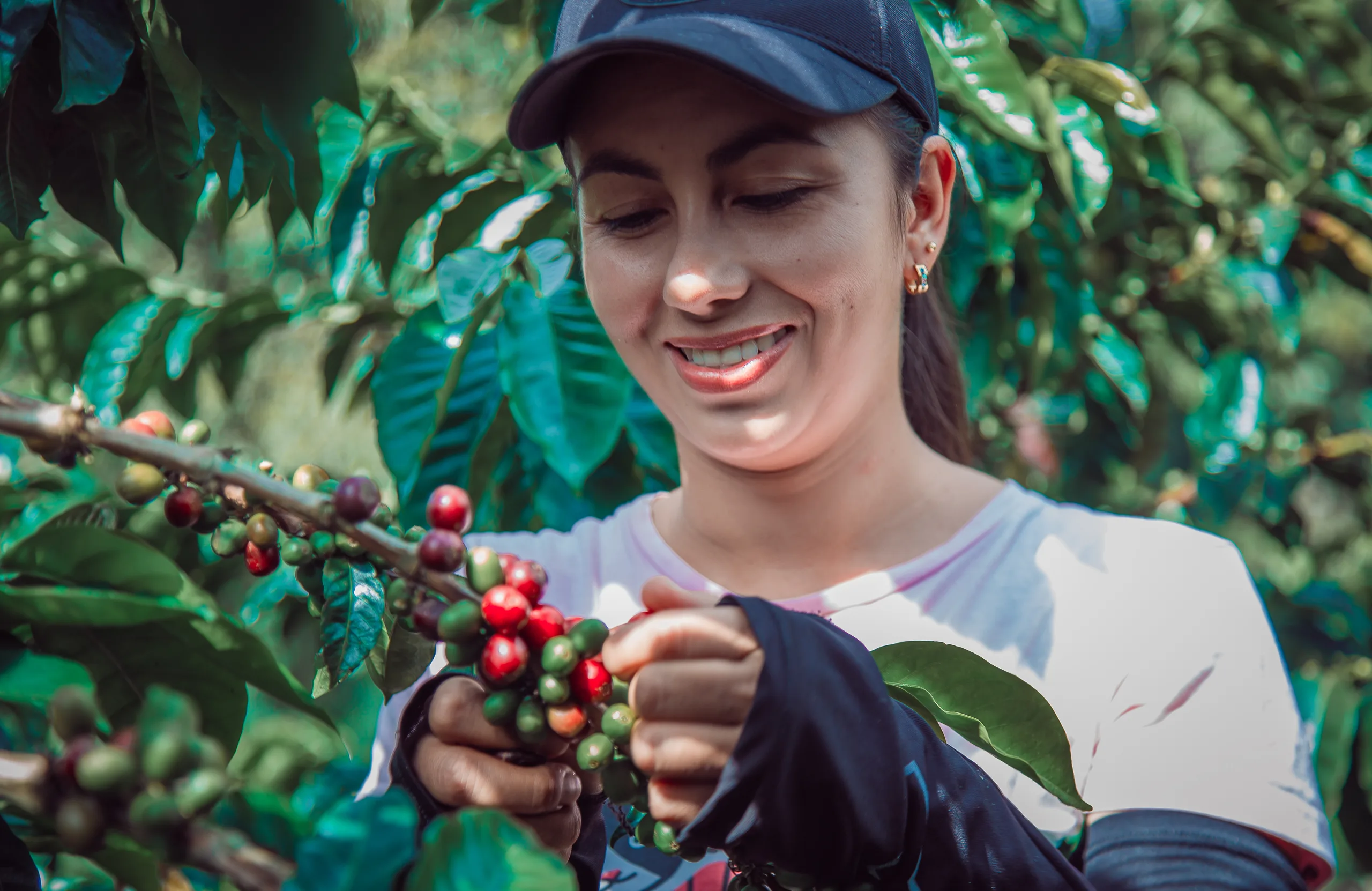
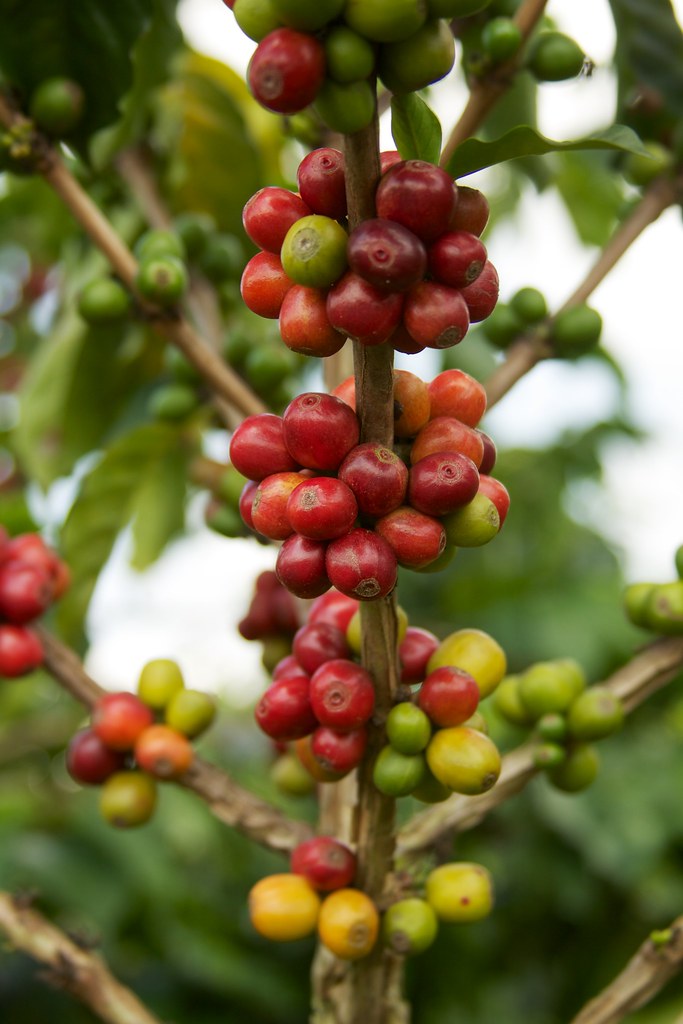
That specialization explains the landscape. High-altitude coffee grows on slopes, on small family farms, and is picked by hand cherry by cherry because machinery cannot climb up there. It is slower and more expensive, and it is exactly what sustains the quality.
In 2011, Unesco added the Coffee Cultural Landscape of Colombia to its World Heritage list. It covers parts of Risaralda, Quindío, Caldas and Valle del Cauca, and what it recognizes is not just scenery but a way of life: smallholdings, hillside cultivation and bahareque houses with brightly painted corridors.
The vocabulary of the farm
This is the vocabulary you will hear on any guided tour, and that appears in no Spanish textbook for foreigners.
- Cereza: the whole red cherry, as picked from the tree.
- Chapolera: the woman who picks the harvest, and also a freshly germinated seedling.
- Despulpado: removing the red pulp to reach the bean.
- Fermentación: the hours the bean spends in a tank before washing.
- Secado: drying, in the sun under canopies or in mechanical dryers.
- Trilla: removing the parchment that wraps the green bean.
- Tueste: roasting, the step that turns green beans into coffee as you know it.
- Catación: professional cupping, noisy slurp included.
Notice something: nearly all of them are nouns derived from verbs you already know. Despulpar, secar, trillar, tostar, catar. Learning the whole family at once is more efficient than memorizing isolated words, and the principle works for any subject area.
The words for the cup
At a cupping you will pick up vocabulary that also works for wine, for food and, with luck, for giving your opinion on anything at all: acidez, cuerpo, aroma, dulzor, notas cítricas, taza limpia, retrogusto. It is abstract vocabulary, which is the hardest kind to acquire and the most useful to have.
Why a coffee farm makes a good lesson
A farm tour runs two to three hours, happens entirely in Spanish and has three features that make it ideal for practice.
- There is constant visual support. When the guide talks about despulpado, the machine is right in front of you, so you follow even without catching the word.
- The vocabulary repeats. Over two hours you will hear fermentación fifteen times, and repetition is exactly what fixes a word in memory.
- Asking is expected. It is a guided visit: nobody is surprised when you ask for something to be repeated or explained more slowly.
It is the opposite of a conversation in a loud bar, where everything moves fast, without context and without a second chance. That is why we recommend it to lower intermediate students, the ones who have the base but lack confidence.
Where to go from Pereira and Medellín
From Pereira you are in the middle of the coffee region: farms with tours open to the public sit less than an hour away, and many are on the road to Salento or Santa Rosa de Cabal, so they fold neatly into a weekend plan.
From Medellín the nearest coffee country is southwest Antioquia, with towns like Jericó, Jardín and Concordia, all three or four hours away by road. That is a full weekend trip rather than an afternoon.
One practical tip: ask whether the tour is run by the owning family or by a hired guide. In the first case the Spanish is more spontaneous and less scripted, which is harder and considerably more useful.
Coffee as a conversation topic
Beyond vocabulary, coffee works as a social entry point. Almost anyone in this region can hold half an hour on it, with firm opinions and family stories attached. Asking where the coffee being served comes from, or whether there was a farm in the family, usually opens long conversations.
And one thing surprises many visitors: for decades nearly all the best Colombian coffee was exported, and what stayed on the local market was lower quality. That has shifted in recent years with local roasters and specialty cafés, and it is a subject people enjoy discussing because everyone has a view.
A language moves faster when there is something concrete worth talking about.
Practising it where it grows
Our campuses are in central Pereira, in the heart of the coffee region, and in Laureles-Estadio in Medellín. In both cities English is not the service language, so what you practise in class gets used the same day at the bakery, in a taxi or on the weekend farm visit.
New students start with a 30-minute trial class, with no commitment.
Learn Spanish with us in Colombia
Mister Fox Spanish School is a licensed school (ETDH) with campuses in Pereira and Medellín (Laureles and Belén): small groups, real teachers and a free trial class.
Recent articles
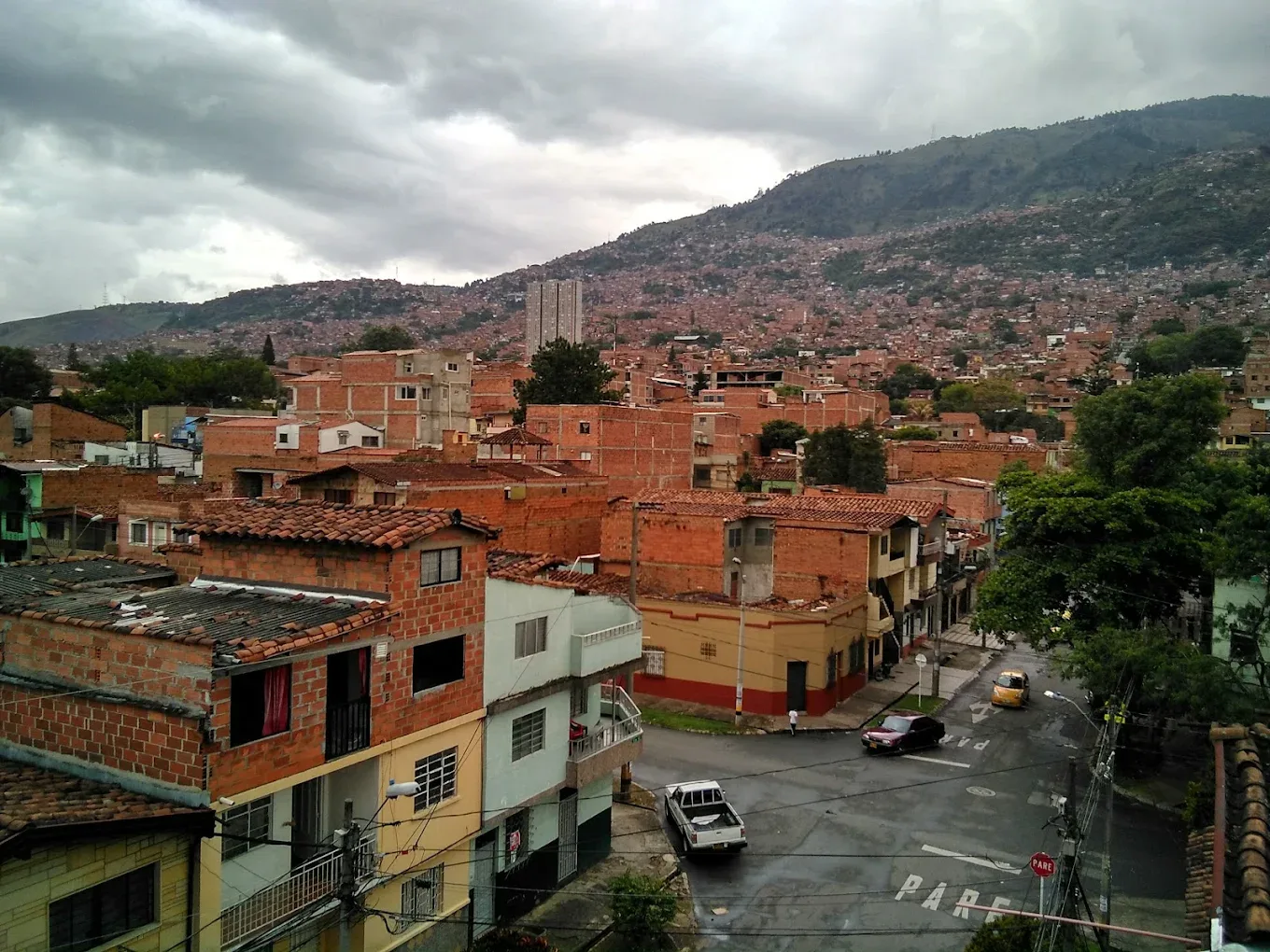
Beyond the Tourist Trail in Medellín: Real Neighborhoods, True Living Costs, and How to Settle In Like a Local
Discover where real medellinenses live, actual living costs by neighborhood, and how to integrate as a genuine resident, not just a tourist.
August 24, 2026 · 5 min read
25 Spanish phrases you'll actually use in your first week in Colombia
From ¿Qué más? to a la orden: the phrases you will really hear on day one in Colombia, with translations and tips to use them like a local.
July 2, 2026 · 4 min read
The best time to move to Medellín or Pereira (weather, festivals, timing your course)
Eternal-spring weather, rainy seasons, the Feria de las Flores and visa timelines: how to pick the right month to start your Spanish course in Colombia.
June 25, 2026 · 4 min read