





Why Taking Spanish Lessons With a Pereirano is Fascinating
A clear accent, living voseo and usted among friends: what sets coffee region Spanish apart and why it is a good place to start.

Equipo Mister Fox
June 16, 2021 · Updated on July 30, 2026 · 5 min read
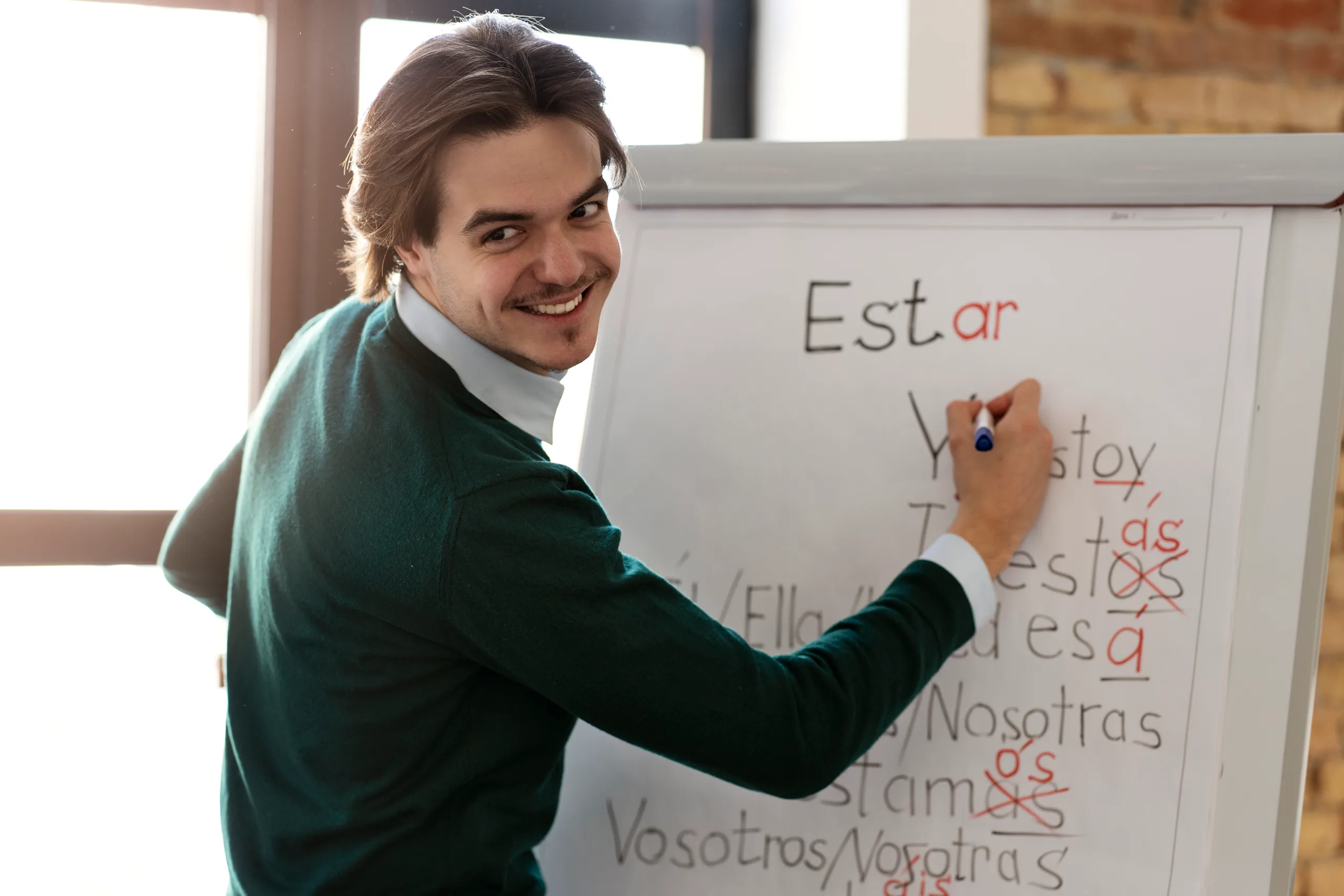
When someone decides to learn Spanish, they rarely think about their teacher's accent. They think about price, schedule and method. And yet where your teacher comes from determines what you will understand in the first month, how easily, and how far you will get before running into the Spanish actually spoken on the street.
What a pereirano is
Pereira is the capital of Risaralda, in the centre of the coffee region, halfway between Bogotá, Medellín and Cali. Its people are pereiranos and belong to paisa culture, the same one that runs through Antioquia, Caldas and Quindío, though with an accent and a character of their own.
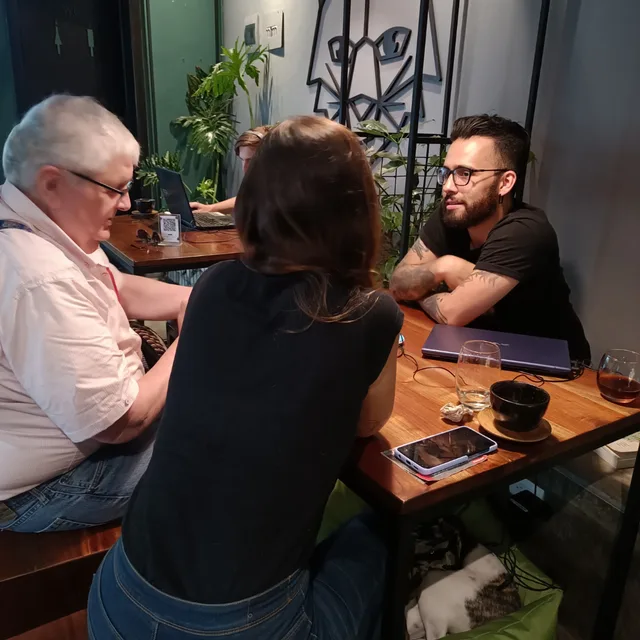
The city is known as la ciudad sin puertas, the city without doors, and the nickname describes the people well: talkative, direct and short on ceremony. For a student that has an immediate consequence. Practice here does not need hunting down. It comes to you.
The phonetic advantage, explained
People repeat endlessly that Colombian Spanish is clear, and almost never explain why. The reasons are concrete and have to do with what happens at the end of each syllable.
- Final s is pronounced. Los libros sounds like los libros, not lo libro.
- Final d holds its place. Ciudad comes out whole.
- L and r are not swapped, as happens in some Caribbean areas.
- The pace is moderate, without the acceleration typical of other regions.
- Politeness formulas mark where each turn begins and ends.
That last point matters more than it looks. When someone opens with qué pena con usted or closes with con mucho gusto, those formulas act as signposts that help you segment the stream of speech. And segmenting is precisely what beginners struggle with.
The practical result is that you understand sooner. It does not make you speak better, but comprehension arrives weeks earlier than with a more compressed accent, and comprehension is what sustains motivation in the early months.
Three ways to say you
This is the part that surprises people most, and the most useful thing about learning with someone from this region. In the coffee region and Antioquia, three forms of address coexist, and the rule you learned from a textbook does not apply.
| Form | How it is used here | Example |
|---|---|---|
| Usted | With strangers, but also with your partner, your children and lifelong friends | ¿Usted qué opina? |
| Vos | Very much alive among friends, with its own verb forms | Vos sos, vos tenés, vení, mirá |
| Tú | Less common here than in other parts of the country | ¿Tú vienes? |
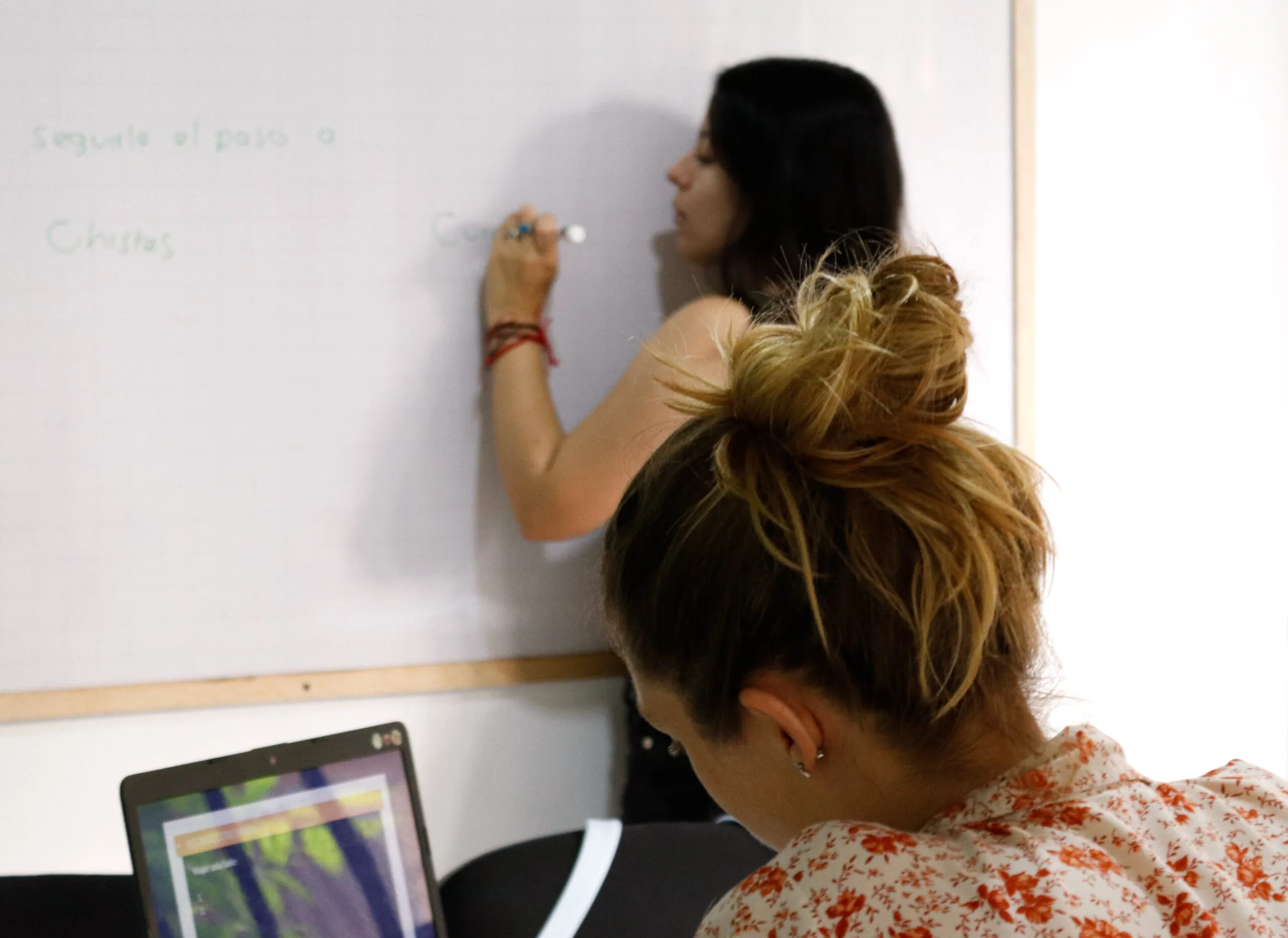
A teacher from the region does not just teach you the forms, they teach you when each one applies, which is what no textbook manages to convey. And they warn you about the trap: apply the European rule that usted equals formal and you will end up sounding odd using tú with your partner's grandmother.
Being a native speaker is not enough
This is worth saying plainly, because plenty of what is on offer rests on a passport alone. Speaking a language since birth qualifies nobody to teach it. Anyone who has tried to explain why Spanish says tengo hambre and not soy hambre knows this first hand.
What a trained native teacher adds is two separate things. From the native side: real intonation, the vocabulary people actually use, and the judgement to say whether a sentence sounds natural or merely correct. From the training side: knowing what order to present material in and what to correct first.
The order of correction is probably the most underrated skill in the job. An untrained teacher corrects everything, and the student stops speaking. A trained one corrects what blocks communication first and leaves noun gender for later.
The context that comes included
There is a part of the language only someone living where you are can teach you. A teacher from here knows how to order at the restaurant on the corner, how to negotiate a rental, what to say when you arrive at someone's house, and which questions count as normal and which do not.
- That regálame un tinto is the normal way to ask for a coffee you are about to pay for.
- That a la orden and con mucho gusto replace de nada around here.
- That dar papaya means exposing yourself unnecessarily, and has nothing to do with fruit.
- That the menú del día is rattled off fast and never repeated twice.
- That some words you will hear daily should stay out of your own vocabulary for the first year.

Does this Spanish work elsewhere?
Yes, and it is a fair question that deserves a straight answer. Between Spanish-speaking countries the accent and some vocabulary change, but the structure is identical. An Argentinian, a Mexican and a pereirano understand each other effortlessly, even while arguing over what to call the same fruit.
Starting with a clear accent also compounds in your favour. Once vocabulary and grammar are installed, adapting to a faster accent is a matter of weeks of exposure. The reverse costs far more, because the words never got fixed properly in the first place.
Studying here
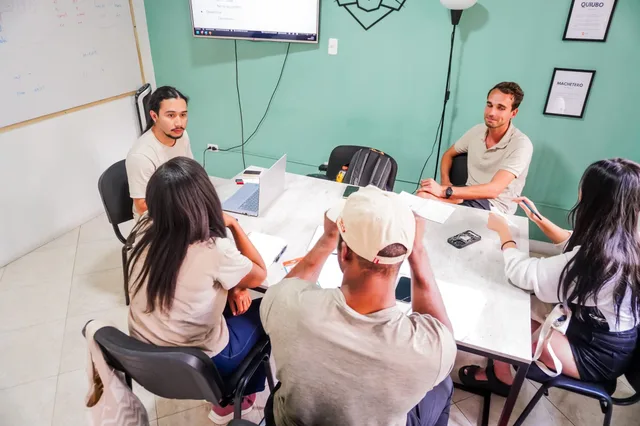
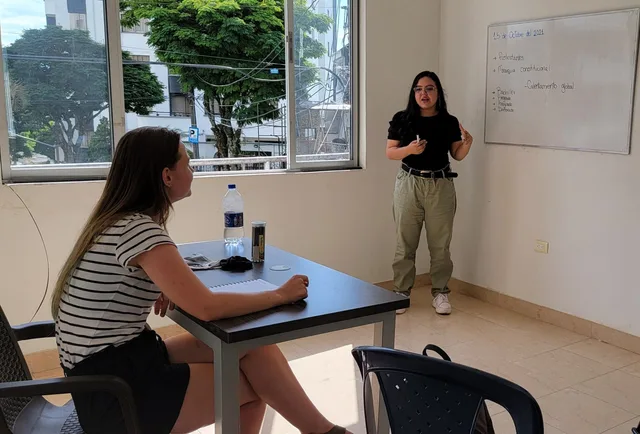
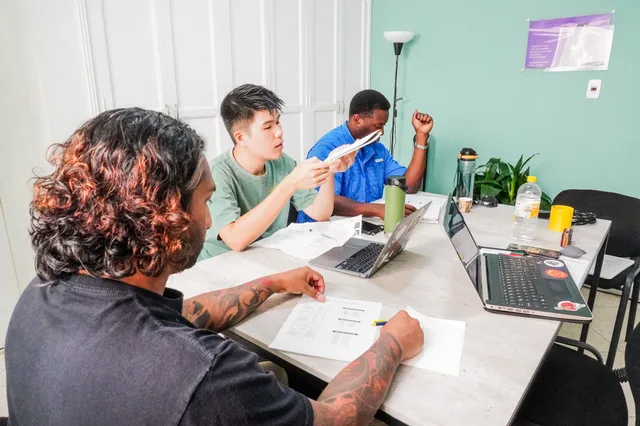
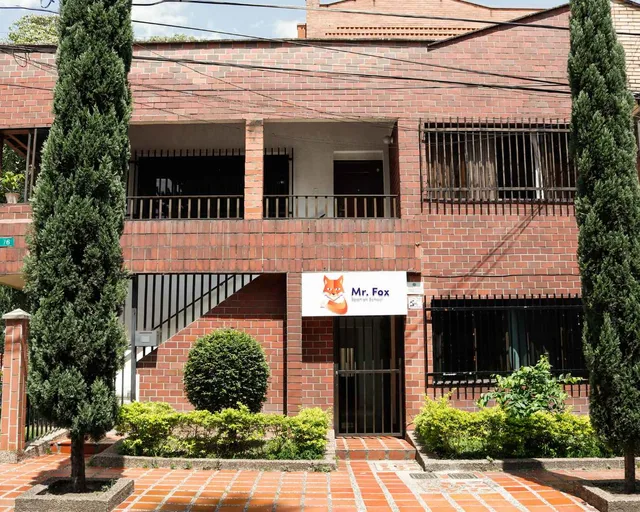
Our campus is in central Pereira, and every teacher is Colombian. The routine that works best is the simplest one: class in the morning, city in the afternoon, so that what you practise in the classroom gets used the same day.
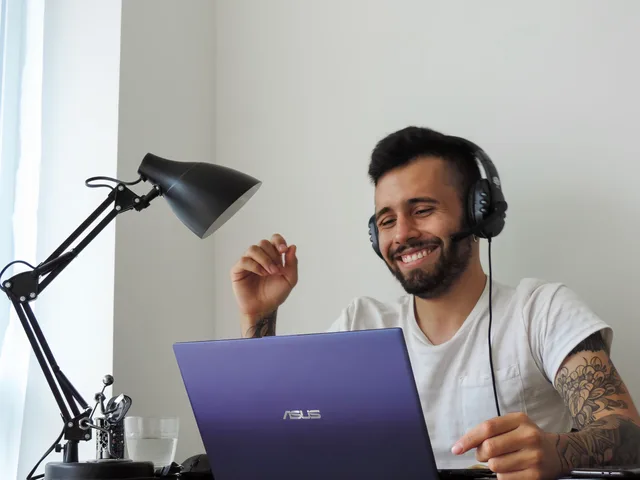
The city helps. Outside a handful of places English does not circulate, so ordering lunch or asking for directions become compulsory exercises. There are also online classes with the same teachers, useful for starting before you travel or continuing once you are back.
A good teacher is not the one who speaks the language best. It is the one who knows what to correct today and what to leave for three months from now.
Where to start
Before picking schedules, it helps to know where you stand. A short test and fifteen minutes of conversation are enough to place your real level, which rarely matches the one you assume, and to work out how many hours a week make sense for you.
New students then get a 30-minute trial class, with no commitment.
Learn Spanish with us in Colombia
Mister Fox Spanish School is a licensed school (ETDH) with campuses in Pereira and Medellín (Laureles and Belén): small groups, real teachers and a free trial class.
Recent articles
Embrace Your Journey: Overcoming the Top 5 Basic Mistakes in Learning Spanish with Mister Fox Spanish School
The five habits that slow down almost every Spanish learner in Colombia, and what tends to work instead in Medellín and Pereira.
July 30, 2026 · 5 min read
25 Spanish phrases you'll actually use in your first week in Colombia
From ¿Qué más? to a la orden: the phrases you will really hear on day one in Colombia, with translations and tips to use them like a local.
July 2, 2026 · 4 min read
The best time to move to Medellín or Pereira (weather, festivals, timing your course)
Eternal-spring weather, rainy seasons, the Feria de las Flores and visa timelines: how to pick the right month to start your Spanish course in Colombia.
June 25, 2026 · 4 min read