






Paisa slang: parce, bacano and qué más pues, decoded
Parce, bacano, qué más pues: 20 paisa expressions decoded with examples, so you sound local in Medellín and Pereira and never dar papaya.
Your textbook gets you through immigration. It will not prepare you for a taxi driver opening with “¿Qué más pues, parce, bien o qué?”, which is one of the friendliest greetings on Earth. This is the paisa dictionary we wish every student had in week one: real expressions, real usage.
First, what is a paisa?
Paisas are the people of Antioquia and the coffee region: Medellín, Pereira and the green mountains around them. Across Colombia they are known for their singsong accent, their business hustle, their regional pride and for talking to everyone, which makes every paisa a free conversation partner who grades generously.
A glossary cannot teach the melody: paisa Spanish rises and falls like a song, questions swoop upward, pues lands like a drumbeat, and whole negotiations happen in intonation alone. Do not fight it; imitating the music is half the accent, and locals enjoy hearing a foreigner try.
Greetings and survival basics
| Expression | What it means | Hear it in action |
|---|---|---|
| parce / parcero | Friend, buddy, dude: the flagship paisa word | “¿Todo bien, parce?” (All good, dude?) |
| ¿Qué más pues? | Hey, what’s up? Not a question about “what more” | “Quiubo, ¿qué más pues?” (Hey, how is it going?) |
| ¿Bien o qué? | Doing well, right? A greeting, not a challenge | “¿Bien o qué, parcero?” |
| ¿O qué? | Tag at the end of anything, roughly “right?” | “¿Vamos a clase o qué?” (We are going to class, yeah?) |
| listo / listo pues | Okay, deal, got it: the all-purpose yes | “Nos vemos a las seis.” “Listo pues.” |
| de una | Absolutely, let’s do it, right away | “¿Salsa esta noche?” “De una.” |
| qué pena | Excuse me, sorry, how embarrassing (used constantly) | “Qué pena, ¿me repite?” (Sorry, could you say that again?) |
| a la orden | At your service, from every shop, stall and taxi | You will hear it forty times a day. Reply with gracias. |
| con mucho gusto | With pleasure: the paisa “you’re welcome” | Say gracias and this comes back like a reflex. |
Sounding like you live here
| Expression | What it means | Hear it in action |
|---|---|---|
| bacano | Cool, great, awesome | “El concierto estuvo muy bacano.” |
| chévere | Cool, nice: pan-Colombian and always safe | “Qué chévere tu apartamento.” |
| melo | Nice, sweet, perfect (very paisa) | “¿Nos vemos en el parque?” “Melo.” |
| parche | Your group of friends, or the plan itself; parchar is to hang out | “¿Cuál es el parche hoy?” (What is the plan today?) |
| tinto | A small black coffee, not red wine | “¿Le provoca un tinto?” (Fancy a coffee?) |
| estar amañado | To feel happily settled somewhere | “¿Ya está amañado en Medellín?” (Feeling at home yet?) |
| hacer vaca | To pool money as a group | “Hagamos vaca para el paseo.” (Let’s chip in for the trip.) |
| guayabo | A hangover | “Amanecí con guayabo.” Say no more. |
| camellar / camello | To work, a job | “Mañana tengo que camellar.” (I have to work tomorrow.) |
| chimba | Very informal: something amazing, and context matters | Learn to understand it first; use it with local guidance. |
The most important expression is no dar papaya. Literally “don’t give papaya”, in practice the national art of not making yourself an easy target: don’t wave your phone around on the street, don’t flash cash, don’t leave your laptop on the café table. It is the best piece of street wisdom Colombia will give you, delivered as fruit, and the sequel explains the stakes: “el que da papaya…”, meaning that what happens next is on you. Applied to daily life it means walking with your phone in your pocket, taking an app ride late at night rather than wandering, and keeping your bag on your lap in a busy restaurant. Locals follow the rule without thinking about it, and once you do too, the city feels as relaxed as it looks.
Pop quiz
- “¿Qué más pues, parce? ¿Bien o qué?” A warm hello and nothing more. Correct response: “Bien o qué, ¿y vos?”
- “Hagamos vaca pa’l paseo, ¿de una?” Your friends want to pool money for a trip, starting now. Correct response: yes, and ask what to bring.
- “Ese parche estuvo muy bacano, quedé amañado.” The hangout was great and the speaker feels settled. Nod like a local; no action is required.
- “No dé papaya con ese celular, pues.” Put the phone away, friend. The pues makes it affectionate.
How to make these stick
Reading a glossary is not the same as surviving a greeting at full speed. Three things work: hearing the expressions daily, which living here takes care of; using them badly in a safe place until you use them well, which is what class and our free intercambios are for; and understanding the grammar underneath, so the slang has something to hang on. Our guide to Colombian Spanish vs Spain Spanish covers that part, including why everyone calls you usted while hugging you. Score yourself generously on the quiz above; everyone here does.
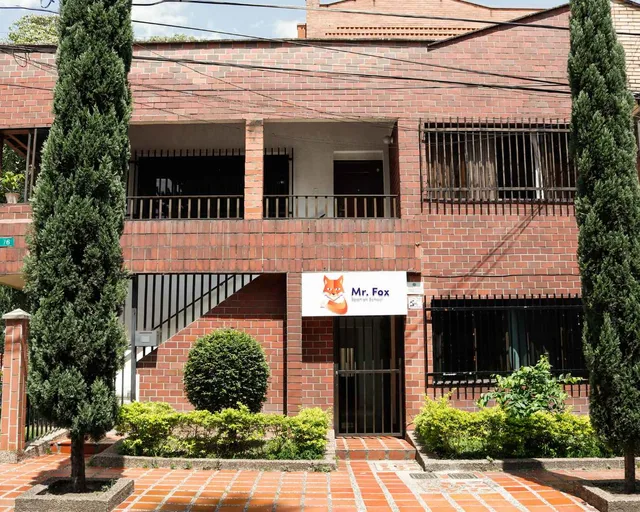
Slang without foundations sounds odd: a confident “¿qué más pues?” followed by panicked silence undoes the magic. So our teachers weave paisa Spanish into every level from A1 up, and what you learn in class on Tuesday morning works on the street on Tuesday afternoon. All three campuses sit in slang territory, Laureles and Belén in Medellín and La Rebeca in Pereira, and our online classes are taught by the same paisa teachers, regional melody included.
Frequently asked questions
What does parce mean?
Friend, buddy, dude: the flagship paisa word, used constantly in Medellín and Pereira between friends and strangers alike. “¿Todo bien, parce?” is simply “All good, dude?”, and parcero is the longer form of the same word.
What does ¿qué más pues? mean?
A greeting: “Hey, what’s up?”, not a question about “what more”. Pues is a filler that softens the sentence. Reply with “Bien o qué, ¿y vos?” or simply “Bien, ¿y vos?”, and the conversation is on.
What does no dar papaya mean?
Literally “don’t give papaya”: don’t make yourself an easy target. Keep your phone out of sight on the street, don’t flash cash and don’t leave your laptop unattended in a café. “El que da papaya…” means what happens next is on you.
Do paisa expressions work outside Medellín?
Most travel well. They work across the coffee region, Pereira included, and several, such as chévere, hacer vaca and qué pena, are understood all over Colombia. Chimba is the one to use carefully until a local shows you how.
What does pues mean?
On its own, pues means “well” or “so”, but paisas use it as a filler that softens almost any sentence: “listo pues”, “vamos pues”, “¿qué más pues?”. It carries no information and a lot of warmth. You will start adding it without noticing after about a week, and that is the first sign of settling in.
Hosted by the school in Medellín and Pereira, locals included.
Your Spanish starts today (and your first class is free)
Your first package gets −10% off on selected plans, applied automatically. See you in Medellín, Pereira or online.