





Learning Spanish the Fun Way With Unique Slang
Parcero, tinto, regálame, ¿cómo así?: a practical guide to the Colombian slang you will hear from day one in Medellín and Pereira.

Equipo Mister Fox
July 5, 2021 · Updated on July 30, 2026 · 6 min read

You finish six months of classes, land in Medellín feeling good about your subjunctive, and the first taxi driver says: eh, parce, ¿bien o qué? You go blank. Your classes did not fail you. No grammar book teaches half of the language people actually use.
Slang is not decoration
There is a widespread idea that you learn proper Spanish first and colloquial Spanish later, if there is time. In practice it works the other way round. Everyday conversation is built on a few dozen expressions that repeat endlessly, and if you do not recognize them you lose the thread even when you know every word in the dictionary.
The good news is that the list is short. Twenty or thirty expressions learned properly will lift the share of conversation you follow all at once. These are the ones you hear most in Antioquia and the coffee region, which is where our campuses are.
The basic kit
| Word | What it means | How it is used |
|---|---|---|
| Parcero, parce | Mate, buddy | Parce, ¿nos vemos a las siete? |
| Bacano, chévere, melo | Good, nice, fun | El paseo estuvo muy bacano. |
| Berraco | Tough, or impressive, depending on tone | Ese examen estuvo berraco. |
| Camello | Job, work | Conseguí camello en el centro. |
| Lucas | Thousands of pesos | Me costó treinta lucas. |
| Parche | Your group of friends, or a plan | Vamos con el parche del sábado. |
| Guayabo | Hangover | Amanecí con un guayabo terrible. |
| Paila | Bad luck, a lost cause | Se acabaron las entradas, quedamos paila. |

The filler words that hold conversations together
These mean almost nothing on their own and appear in every sentence. Ignoring them is like trying to read without commas.
- Pues: the paisa signature. It goes at the end of almost everything. Listo pues, hágale pues, eso pues.
- ¿Cómo así?: expresses surprise or asks for an explanation. The single most useful question in Colombian Spanish.
- Hágale: go ahead, do it.
- Bien pueda: please do, help yourself.
- ¿Qué más?: not a literal question, just a greeting. Roughly, how are you doing?
- Ave María pues: an exclamation of astonishment, with no real religious weight.
Regálame un tinto
Two surprises here at once. First, tinto is not red wine but black coffee. Second, in Colombia you ask for things using the verb regalar, to gift, even though you are paying: regáleme un tinto, regálame la cuenta. It sounds absurd at first and within two weeks you will be saying it without thinking.
Along the same lines, when you walk into a shop you will be greeted with a la orden, and when you say thank you the reply will be con mucho gusto rather than de nada. In Antioquia and the coffee region that is practically law.
Usted, tú and vos
Textbooks taught you that usted is formal and tú is informal. In Antioquia that rule breaks every day. Plenty of people here use usted with their partner, their children and their oldest friends. It is not distance, it is habit.
On top of that there is vos, very much alive in Medellín and the coffee region, with its own verb forms: vos sos, vos tenés, vos sabés, vení, mirá, hacelo. Nobody expects you to use it, but you will hear it constantly and it pays to recognize it.
Local false friends
- Mono or mona is not an animal here: it means a blond or fair-skinned person.
- Pena is not sorrow, it is embarrassment. Qué pena con usted means excuse me.
- A tinto is a black coffee, not a glass of wine.
- Vaina is any object whose name you cannot remember or would rather not say.
- Sapo is not just the animal: it is someone who tells on others.
- Cucho and cucha mean an older person, and also your parents, affectionately.
No dar papaya
This one deserves its own section because it is not an expression, it is a way of reading the world. Dar papaya means exposing yourself unnecessarily: leaving your phone on the bar table, pulling out your wallet in the middle of the street, telling a stranger where you live.
The full phrase you will hear is papaya puesta, papaya partida, and it works as safety advice and gentle reproach at the same time. It is worth understanding properly, because it sums up a good part of the local common sense about street life.
Three words to understand, not to use
Some expressions you will hear on day one and should not adopt until you have been here a long time. We mention them because not knowing them exposes you to a worse misunderstanding than knowing them does.
- Marica: among close friends in Medellín it works as a filler, roughly like mate or dude. Outside that circle it can be a homophobic slur. Listen for it, do not repeat it.
- Chimba: qué chimba means how great, but the word has vulgar origins and shifts meaning with context. Not for a job interview or your partner's family.
- Gonorrea: among very close friends it can be almost affectionate, and in any other context it is a strong insult. Leave that one to the locals.
The general rule is simple: comprehension first, production later. A foreigner who understands these words and does not use them comes across well. One who uses them wrongly does not.
How to pick it up without sounding forced
The classic mistake is cramming five new expressions into a single sentence. It sounds like a tourist reciting an internet video and produces the opposite of the intended effect. Slang works when it comes out on its own, at the right moment, and that only happens after hearing it many times.
- Write expressions down inside the full sentence you heard them in, never on their own.
- Adopt one new expression a week and use it until it comes out without thinking.
- Ask without embarrassment: ¿cómo así? exists precisely for that.
- Remember that slang changes from city to city and from one generation to the next.
- Before using a new word, notice who says it and who they say it to.
The day you get a joke without anyone explaining it, that is the day you speak Spanish.
Practising it where it is spoken
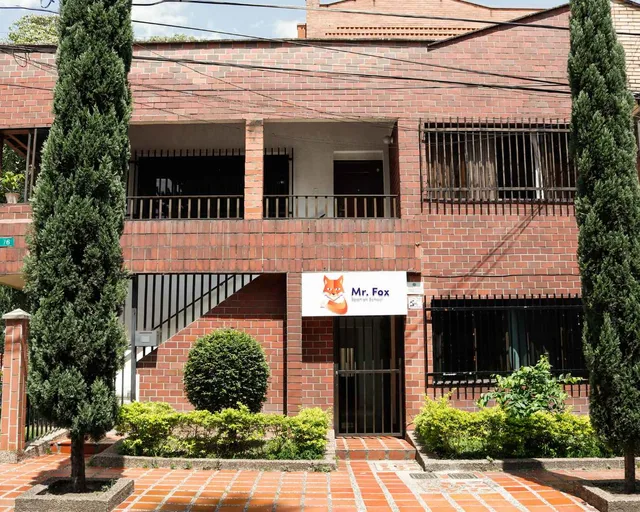
Slang is learned by listening, and that means being where it gets spoken. Our campuses are in Medellín, in the Laureles-Estadio neighborhood, and in central Pereira, two places where English is not the default language and practice starts the moment you leave class.
If you want to start before travelling, there are online classes with the same teachers, all of them Colombian, who will correct you on the spot when you use an expression in the wrong setting.
New students then get a 30-minute trial class, with no commitment.
Learn Spanish with us in Colombia
Mister Fox Spanish School is a licensed school (ETDH) with campuses in Pereira and Medellín (Laureles and Belén): small groups, real teachers and a free trial class.
Recent articles
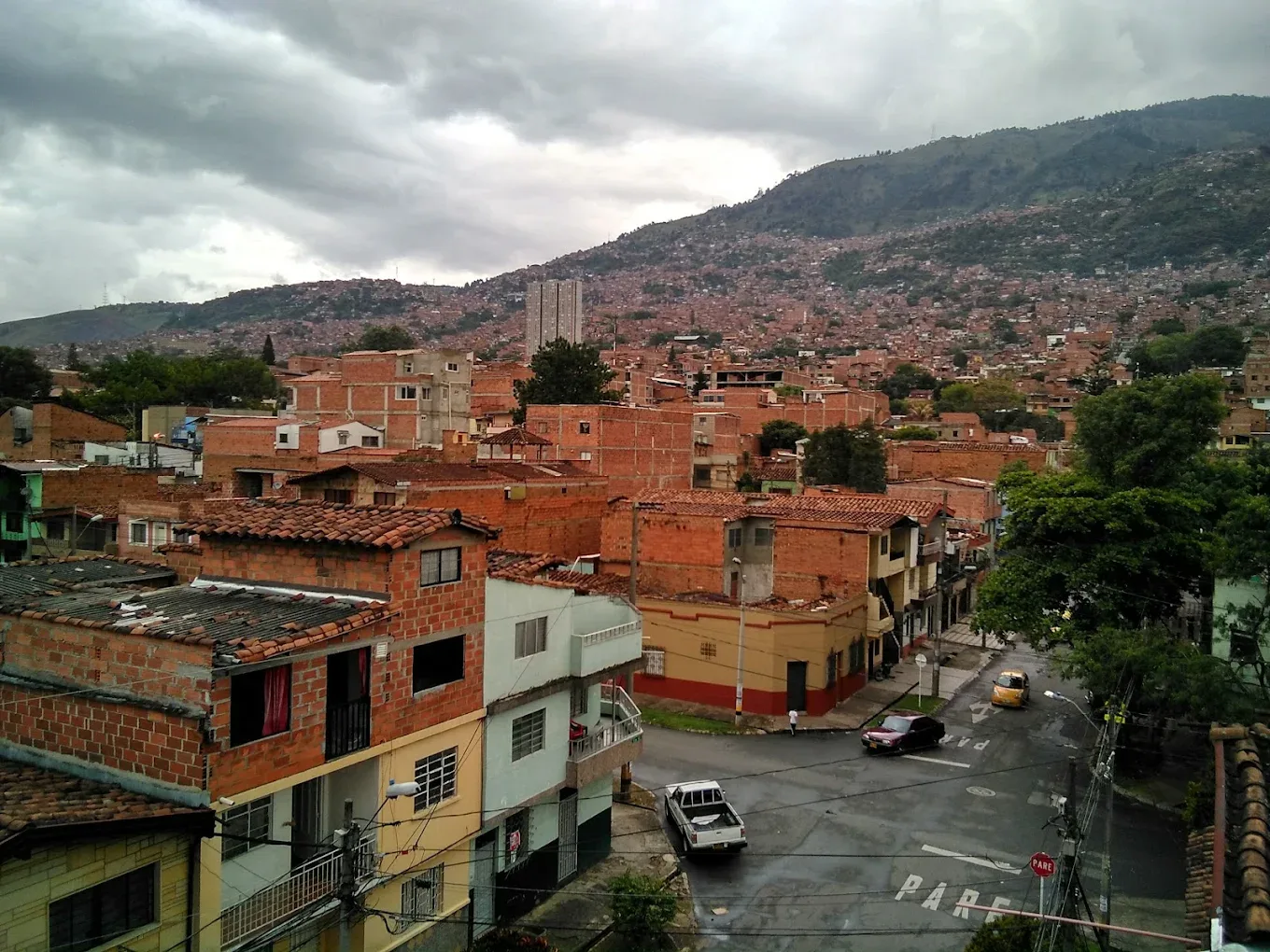
Beyond the Tourist Trail in Medellín: Real Neighborhoods, True Living Costs, and How to Settle In Like a Local
Discover where real medellinenses live, actual living costs by neighborhood, and how to integrate as a genuine resident, not just a tourist.
August 24, 2026 · 5 min read
25 Spanish phrases you'll actually use in your first week in Colombia
From ¿Qué más? to a la orden: the phrases you will really hear on day one in Colombia, with translations and tips to use them like a local.
July 2, 2026 · 4 min read
The best time to move to Medellín or Pereira (weather, festivals, timing your course)
Eternal-spring weather, rainy seasons, the Feria de las Flores and visa timelines: how to pick the right month to start your Spanish course in Colombia.
June 25, 2026 · 4 min read