






Why Your Spanish Stopped Improving After Living in Colombia
You get by in Medellín, you took classes, and you still speak badly. Why intermediate Spanish freezes in Colombia and how to start moving again.

Equipo Mister Fox
August 5, 2026 · 7 min read

You have been in Medellín for a year or two. You order the tinto in Spanish, you argue about rent in Spanish, you date people who do not speak a word of English. Everyone understands you and nobody corrects you. Then one day you hear yourself on a video and it is uncomfortable. You do not sound like a beginner. You sound like someone who got stuck a long time ago and never noticed.
Being understood is not the same as speaking well
Comprehension is a very low bar. For a paisa to understand that you want an arepa con quesito, you do not need gender agreement, the subjunctive or the imperfect. Three nouns and a bit of goodwill will do it. And in Colombia there is plenty of goodwill.
That is the trap. Immersion gives you constant feedback on whether you were understood and almost none on whether you were correct. Your brain optimises for whatever gets measured. If the only thing being measured is that they got it, accuracy stops being worth paying for the day it stops being necessary.

The mistakes no Colombian will ever correct
These are the patterns that show up again and again in students who come to us after one, two or five years in the country. None of them blocks communication. That is exactly why none of them fixes itself.
- The subjunctive by avoidance. You do not use it wrong, you steer around it. You say creo que va a llover so you never have to say no creo que vaya a llover, and cuando llego te aviso instead of cuando llegue te aviso.
- Ser and estar frozen into four or five memorised templates. They cover about 80% of situations, and the other 20% sounds off without you knowing why.
- One single past tense. The preterite swallows the imperfect: ayer fui al gimnasio y hacía calor becomes ayer fui al gimnasio y hizo calor.
- Missing pronouns. Se me olvidó turns into yo olvidé, se lo dije turns into yo dije a él. It is still understood, which is precisely why it never gets repaired.
- Prepositions calqued from English: pensar sobre instead of pensar en, depender en instead of depender de, buscar por instead of plain buscar.
- Gender that never quite lands. La problema, el foto. It never blocks communication, so nobody points it out.
Linguists call this fossilisation: errors that stop being learning slips and become a stable part of how you speak. More exposure does not fix them, because exposure is what locked them in.
Immersion teaches you to communicate. Only correction teaches you to speak well.
Why immersion stopped working around month six
The first months in Colombia are spectacular. You go from understanding nothing to handling daily life, and the curve feels vertical. Then it flattens, almost always for the same four reasons.
- You repeat the same twenty conversations: the taxi, the café, the gym, the doorman, the dating app. Twenty scripts you already own, none of which forces you to build anything new.
- Your vocabulary settles around fifteen hundred words. Enough to live, not enough to argue, negotiate or hold an opinion.
- Nobody corrects you. Correcting an adult in public is awkward, and here politeness outranks pedagogy.
- You stopped reading and writing in Spanish. Without written production, complex structures never move from recognising them to using them.
There is also a very paisa detail on top of all this. Parce, pues and ¿sí o qué? take about two weeks to pick up. They make you sound local for roughly eight seconds, until the first sentence that needs the subjunctive. That gap between a borrowed accent and broken grammar is what makes people switch to English on you.
Plateau signs that look like progress
| What happens | What you think it means | What it actually means |
|---|---|---|
| Nobody ever corrects you | You speak well | They understand you and do not want to embarrass you |
| People tell you your Spanish is great | Real validation | Paisa politeness. They say it to anyone who manages buenas |
| You understand almost everything | High level | Your receptive level runs one or two steps ahead of what you can produce |
| You use parce, pues and ¿sí o qué? | You sound local | You sound local for eight seconds, until the first sentence with a subjunctive |
| You never stumble in daily life | Fluency | Fluency inside the twenty conversations you always have |
| You avoid certain sentences without noticing | Personal style | Avoidance. Your brain is routing around structures it cannot build |
Survival Spanish and Spanish that gets you taken seriously
There is a Spanish that lets you live here and a Spanish that gets you treated like an adult. The first one you pick up on the street in six months. The second one never shows up by accident.
The difference shows in the moments that count: a medical appointment where you have to describe a symptom precisely, a notaría, a Migración Colombia appointment, a work meeting, a rent negotiation, a complaint to your health provider. Informal register is useless there, and anyone who cannot switch register ends up treated like a tourist, with the pricing that implies.
How to find out your real level
Almost every student who arrives with two years of Colombia behind them describes themselves as B2. On assessment they usually land between high A2 and B1. It is not dishonesty. Your receptive level (what you understand) runs one or two steps ahead of your productive level (what you produce accurately), and people judge themselves by the first one.
A serious placement test measures both separately, includes speaking and writing, and tells you exactly which structures are broken. It is an uncomfortable number and it is the starting point of any rebuild.
Ten minutes online, a CEFR result and an honest recommendation.

How to rebuild fossilised Spanish
Change the target: production, not comprehension
You already understand. The work left is producing accurately, and that needs different conditions: less background podcast, more speaking under correction with someone who forces you to build the sentences you normally avoid.
Ask people to interrupt you
Tell your teachers, your partner and your friends to cut you off when you get it wrong. They will not do it on their own. And be specific: ask for corrections on the subjunctive and the past tenses, not on everything, because correcting everything ends up correcting nothing.
Go back to grammar, but targeted
You do not need to redo a full A1. You need to attack four or five specific structures, yours, with directed practice until they come out without thinking. It is surgical work, which is why it moves fast when the diagnosis is good.
Write something every week
An email, a summary of your week, a long WhatsApp message written carefully. Writing is the only way to think slowly in a language and to review yourself without the pressure of a live conversation.
How long it takes: with four to six focused hours a week, most fossilised students see a real change in three or four months and move a full CEFR level in six to nine. It is slower than for a beginner, because on top of learning the new thing you have to dismantle the old one.
Realistic timelines level by level, with no three month promises.
Start with the diagnosis
Plateaus do not break with more immersion. They break with targeted correction on identified errors. At Mister Fox we work every week with students who have spent years in Medellín and Pereira and who arrive at exactly this point: they can handle everything and master nothing. The first class is a real assessment, not a sales call.
In person in Laureles or Pereira, or online from wherever you are.
Learn Spanish with us in Colombia
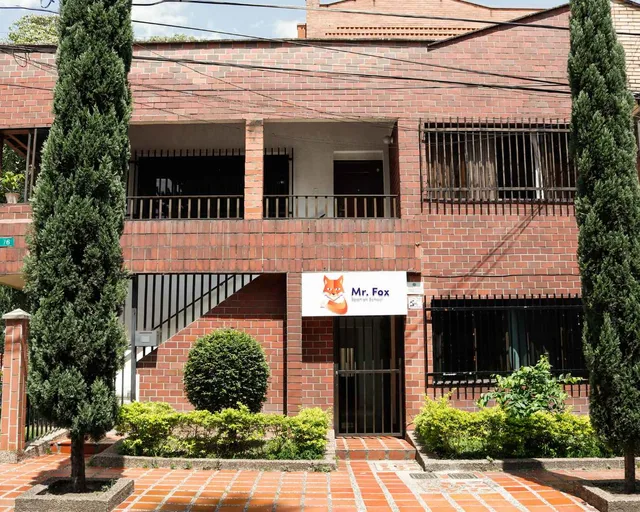
Mister Fox Spanish School is a licensed school (ETDH) with campuses in Pereira and Medellín (Laureles and Belén): small groups, real teachers and a free trial class.
Recent articles
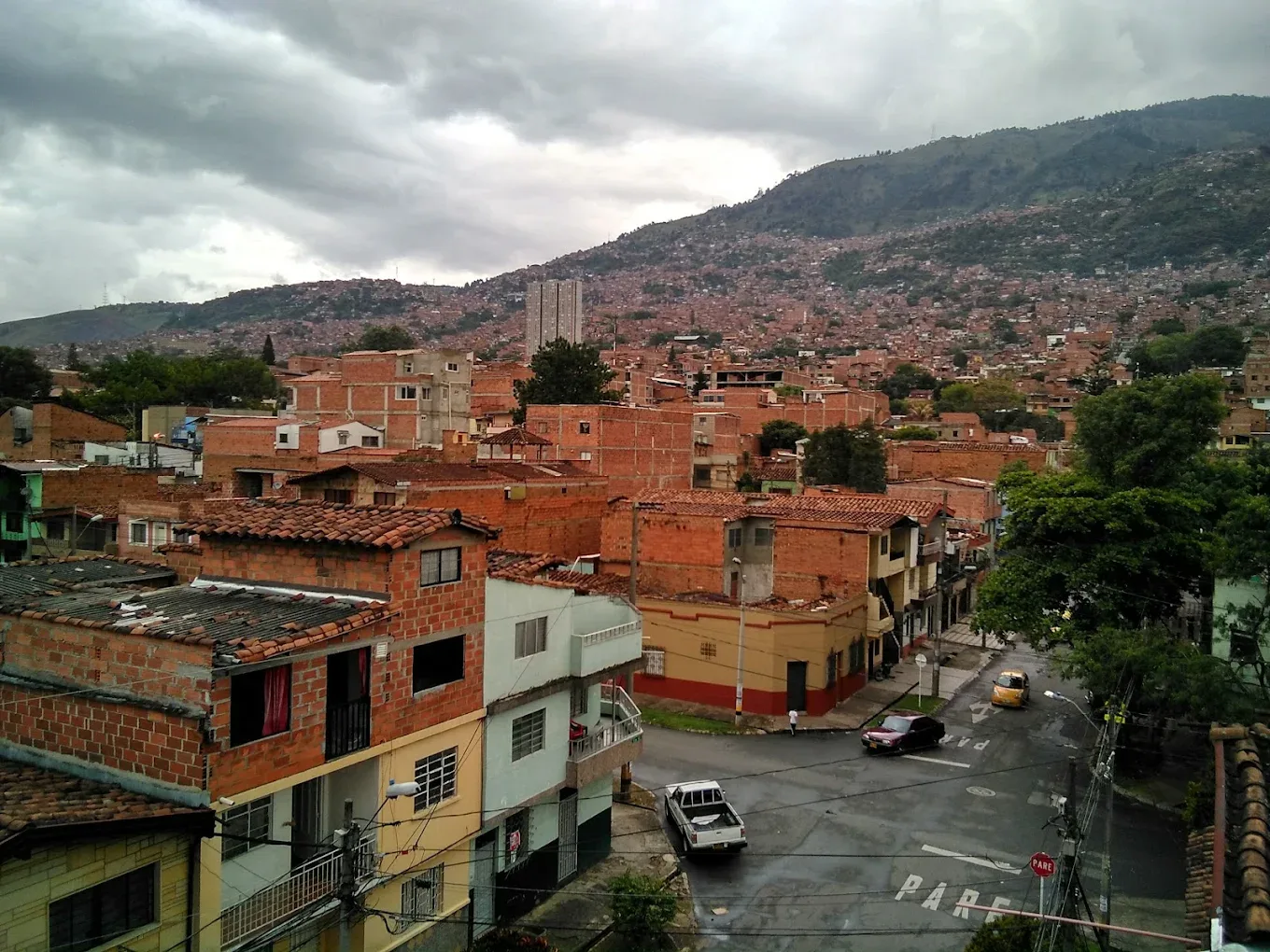
Beyond the Tourist Trail in Medellín: Real Neighborhoods, True Living Costs, and How to Settle In Like a Local
Discover where real medellinenses live, actual living costs by neighborhood, and how to integrate as a genuine resident, not just a tourist.
August 24, 2026 · 5 min read
The best time to move to Medellín or Pereira (weather, festivals, timing your course)
Eternal-spring weather, rainy seasons, the Feria de las Flores and visa timelines: how to pick the right month to start your Spanish course in Colombia.
June 25, 2026 · 4 min read
How long does it take to learn Spanish? An honest timeline
A realistic look at how long each CEFR level tends to take, why immersion changes the math, and how to set goals you can actually keep.
June 18, 2026 · 4 min read