








Embrace Your Journey: Overcoming the Top 5 Basic Mistakes in Learning Spanish with Mister Fox Spanish School
The five habits that slow down almost every Spanish learner in Colombia, and what tends to work instead in Medellín and Pereira.

Equipo Mister Fox
July 30, 2026 · 5 min read
You can order coffee, ask for the bill and give a taxi driver the right address. Then someone asks you a real question at a party and the whole thing falls apart. That gap is normal, and it usually has nothing to do with talent or memory. It comes down to a handful of habits that are easy to correct once you can see them.
The same five patterns, over and over
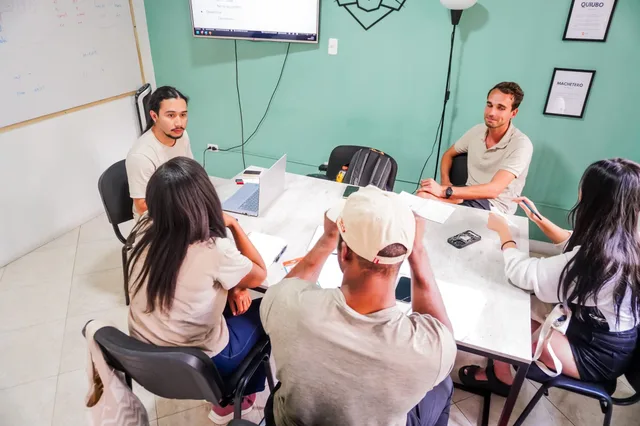
Students arrive at our classrooms in Pereira and Medellín from very different places, with very different reasons. Some are staying three months. Some came for work. Some married into a Colombian family and got tired of missing half the jokes at Sunday lunch.
None of these mean you are bad at languages. They are detours, not dead ends. Here are the five we see most often, and what tends to work instead.

Mistake 1: Waiting until your Spanish is good enough to use it
This one is the most common and the most expensive. People study for months, build a solid passive vocabulary, understand a good deal of what they hear, and still answer in English because they do not want to sound clumsy. Comprehension keeps growing. Speaking stays frozen.
Speaking is a physical skill before it is an intellectual one. Your mouth needs the repetitions. A student who speaks badly for twenty minutes a day will overtake a student who studies silently for an hour, usually within a couple of months.
Mistake 2: Translating from English word by word
English and Spanish do not carve up the world the same way. When you build sentences by swapping one word for another, you produce phrases that people here will understand but that keep you sounding foreign far longer than necessary.
The way out is to learn the pattern rather than the equivalent word. A few examples that come up in almost every beginner class:
| What English suggests | What Spanish actually says | The logic |
|---|---|---|
| I am 30 years old | Tengo 30 años | In Spanish you have years, you are not them |
| I am hungry | Tengo hambre | Hunger, thirst and cold work the same way |
| It is cold today | Hace frío hoy | Weather uses hacer, not ser or estar |
| I like the beach | Me gusta la playa | The beach does the liking, not the other way round |
| I am 20 minutes late | Llego 20 minutos tarde | Spanish uses the verb to arrive, not to be |
Mistake 3: Collecting rules instead of collecting phrases
Ser and estar. Por and para. The subjunctive. Every learner has a folder of notes on these and still hesitates in the moment, because retrieving a rule takes a few seconds and a conversation does not wait that long.
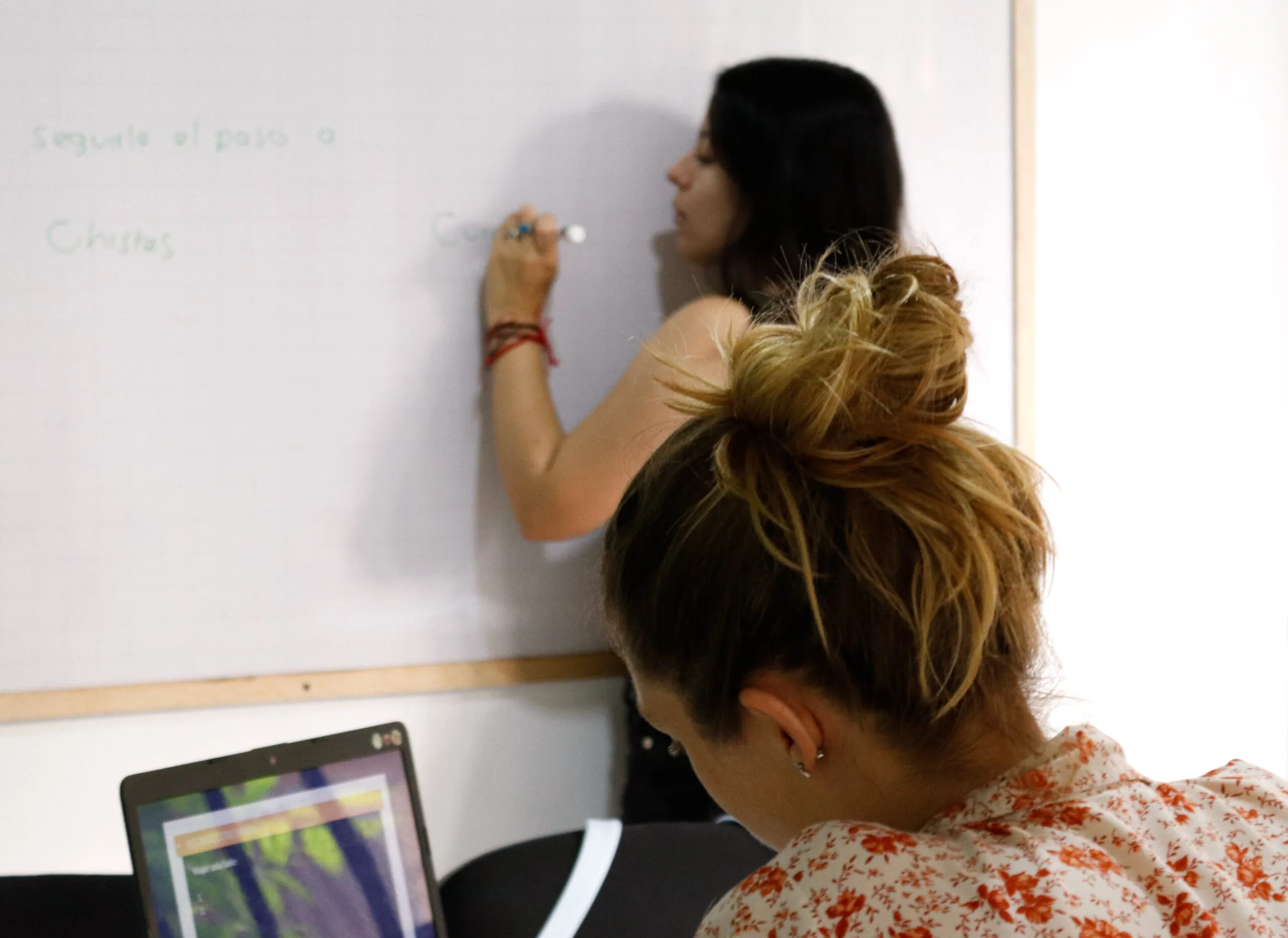
Fixed phrases are much faster. Estoy de acuerdo, por si acaso, para nada, ya voy, me da igual, qué pena con usted. You are not deciding anything when you say them. You are pulling a whole block off the shelf. Learn twenty of those and your speech gets noticeably smoother, even if your grammar has not moved an inch.
Rules still matter, just later
Grammar explanations do their best work when they organize something you have already met in use. Studying the fourteen uses of por before you have heard por in fifty real sentences is the wrong order, and it explains why so many students can recite the rule and still get it wrong out loud.
Mistake 4: Practicing only with other foreigners
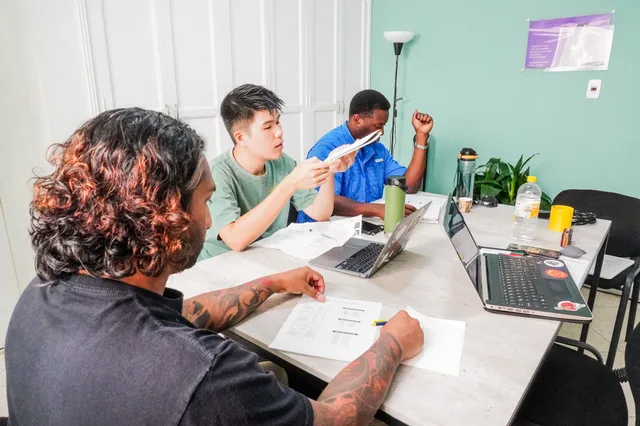
Practicing with classmates is comfortable. Everyone speaks slowly, everyone forgives the same errors, and nobody uses the words you have not learned yet. The trouble is that the Spanish spoken in that room is not the Spanish of the market, the WhatsApp voice note or the family lunch.
Colombia makes this easy to fix. In Pereira, English is rarely an option outside a few places, so ordinary errands turn into practice whether you planned it or not. In Medellín you have to be slightly more deliberate, because it is perfectly possible to spend a week in El Poblado without leaving an English-speaking bubble.

Mistake 5: Studying in bursts and then disappearing
Three intense days followed by two silent weeks feels productive and achieves very little. Language runs on frequency. Short daily contact beats long weekend sessions, and the gap between the two widens month after month.
That is why intensive formats suit people who are here for a season. Two hours a day from Monday to Friday for a month builds the reflex of thinking in Spanish. One class a week for a year rarely does, because you spend the first fifteen minutes of every class rebuilding what you forgot.
Bonus: false friends that catch almost everyone
- Embarazada means pregnant, not embarrassed. For embarrassed, say avergonzado.
- Éxito means success. The way out is la salida.
- Actualmente means currently. For actually, say en realidad.
- Sensible means sensitive. The English sensible is sensato.
- Librería is a bookshop. A library is una biblioteca.
- Constipado refers to a head cold, so choose your words carefully at the pharmacy.
The students who progress fastest are not the most gifted ones. They are the ones who keep talking after they get something wrong.
How we work on this at Mister Fox
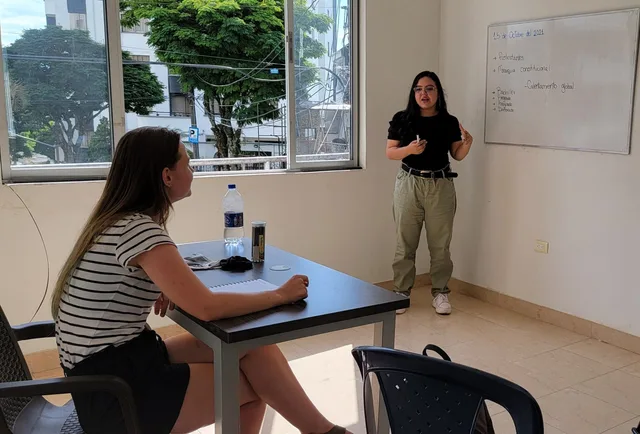
Every student starts with a placement test, because the quickest way to lose a month is to sit in the wrong group. Classes stay small, so you spend most of the session speaking instead of listening to someone else speak. Corrections land in the moment, while they are still attached to something you were actually trying to say.
The rest happens outside the classroom, in Laureles-Estadio in Medellín and in central Pereira, where the practice is constant and free if you decide to use it.
New students start with a 30-minute trial class, with no commitment.
Learn Spanish with us in Colombia
Mister Fox Spanish School is a licensed school (ETDH) with campuses in Pereira and Medellín (Laureles and Belén): small groups, real teachers and a free trial class.
Recent articles
25 Spanish phrases you'll actually use in your first week in Colombia
From ¿Qué más? to a la orden: the phrases you will really hear on day one in Colombia, with translations and tips to use them like a local.
July 2, 2026 · 4 min read
The best time to move to Medellín or Pereira (weather, festivals, timing your course)
Eternal-spring weather, rainy seasons, the Feria de las Flores and visa timelines: how to pick the right month to start your Spanish course in Colombia.
June 25, 2026 · 4 min read
How long does it take to learn Spanish? An honest timeline
A realistic look at how long each CEFR level tends to take, why immersion changes the math, and how to set goals you can actually keep.
June 18, 2026 · 4 min read