





How long does it take to learn Spanish? An honest timeline
A realistic look at how long each CEFR level tends to take, why immersion changes the math, and how to set goals you can actually keep.

Equipo Mister Fox
June 18, 2026 · 4 min read
Type this question into any search engine and you will find answers ranging from "three weeks" to "ten years". Both are wrong for most people. As a school that watches students move through every level of the CEFR, week after week, we would rather give you the honest version: it depends on your starting point, your hours, and your method — but it is far more predictable than the internet makes it sound.
First, the honest answer
Nobody can promise you a date on which you will "speak Spanish", because speaking a language is not a switch — it is a slope. What we can tell you is how progress usually behaves: the climb from zero to ordering food and making small talk is surprisingly fast, the climb from there to comfortable conversation is steady work, and the climb to near-native nuance is a long tail that most learners never need to finish.
The CEFR levels, in plain English
The Common European Framework of Reference (CEFR) splits language ability into six levels, from A1 to C2. Our programs run from A1 to C2, and here is what each level actually feels like in daily life in Colombia:
| Level | What it feels like in real life |
|---|---|
| A1 | You survive: greetings, numbers, ordering a coffee, taxi directions. |
| A2 | You function: shopping, simple plans with friends, talking about your routine. |
| B1 | You connect: real conversations about your life, opinions and plans — with mistakes, and that is fine. |
| B2 | You belong: spontaneous discussions, jokes, work meetings, arguing about football. |
| C1 | You impress: nuance, irony, professional writing, following fast native speech. |
How long each level tends to take
Estimates vary between institutions, and no two learners are identical — but the ranges below reflect what is commonly cited for guided study, and they match what we see in our own classrooms. Treat them as a compass, not a contract:
| Milestone | Rough guided-study hours (cumulative) |
|---|---|
| Reaching A1 | Often around 60–100 hours |
| Reaching A2 | Often around 160–200 hours |
| Reaching B1 | Often around 350–400 hours |
| Reaching B2 | Often around 500–650 hours |
| Reaching C1 | Often around 700–900 hours |
Immersion vs. two hours a week
Here is where the math gets interesting. Two hours of class per week adds up to roughly a hundred hours in a year — meaning that a casual after-work course can take years to reach a solid B1. An intensive immersion program covers the same classroom hours in a few months. But the classroom is only half of the story.
When you study in Colombia, every taxi ride, bakery visit and overheard conversation becomes unpaid practice. Many of our students tell us that the street consolidates in a week what the classroom introduced in a month. That is the real argument for immersion: not just more hours, but hours that stick.
- You hear the language at real speed, all day, in dozens of accents.
- You are forced to use what you learned within hours, not weeks — which is when it moves to long-term memory.
- Motivation stops being abstract: understanding your neighbour is an immediate, daily reward.
- Culture and vocabulary arrive together — you learn tinto with the coffee in your hand.
What actually speeds you up
- Consistency beats intensity. Ninety minutes daily outperforms a heroic seven-hour Sunday.
- Speaking early. Waiting to be "ready" is the most expensive mistake in language learning.
- A structured curriculum. Random apps and videos are great seasoning, terrible main course.
- Living in the language. Ordering, flirting, complaining — real stakes accelerate everything.
- A teacher who corrects you. Fossilized errors are much slower to fix than to prevent.
So… how long for you?
If you study intensively and live where Spanish is spoken, reaching a conversational B1 within a few months of full-time study is a realistic ambition for many students. If you study a few hours a week from abroad, think in seasons and years, not weeks — and that is perfectly fine too. The only genuinely wrong timeline is the one that makes you quit. Set a level as your goal, not a date, and let the hours do their quiet work.
Meet a teacher, get your level assessed, and map out a timeline that fits your life.
Frequently asked questions
Can I really learn Spanish in three months?
You can make dramatic progress in three months of intensive immersion — many students reach a solid conversational level. "Finished learning", though, is a myth at any timeline: think of three months as the launch, not the landing.
Is Spanish easier for English speakers than other languages?
Generally yes. Spanish shares thousands of cognates with English, uses the same alphabet and has very regular pronunciation. The verb system takes work, but compared with many languages, Spanish is a friendly place to start.
Do I need to reach C1 to live comfortably in Colombia?
No. Most daily life — friendships, errands, travel, even many jobs — runs perfectly well on a strong B1 or B2. C1 matters mostly for academic and high-stakes professional contexts.
Learn Spanish with us in Colombia
Mister Fox Spanish School is a licensed school (ETDH) with campuses in Pereira and Medellín (Laureles and Belén): small groups, real teachers and a free trial class.
Recent articles
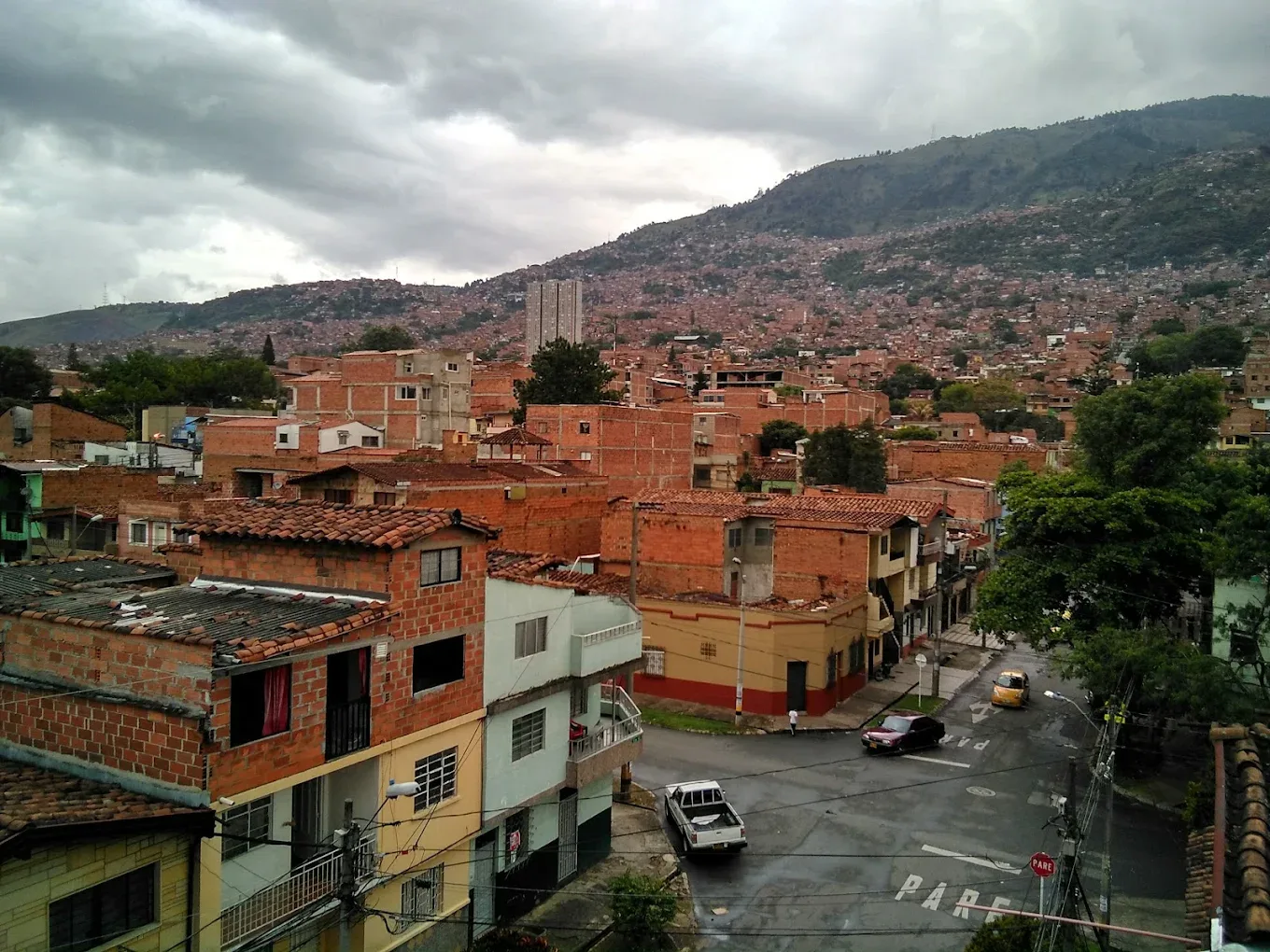
Beyond the Tourist Trail in Medellín: Real Neighborhoods, True Living Costs, and How to Settle In Like a Local
Discover where real medellinenses live, actual living costs by neighborhood, and how to integrate as a genuine resident, not just a tourist.
August 24, 2026 · 5 min read
25 Spanish phrases you'll actually use in your first week in Colombia
From ¿Qué más? to a la orden: the phrases you will really hear on day one in Colombia, with translations and tips to use them like a local.
July 2, 2026 · 4 min read
The best time to move to Medellín or Pereira (weather, festivals, timing your course)
Eternal-spring weather, rainy seasons, the Feria de las Flores and visa timelines: how to pick the right month to start your Spanish course in Colombia.
June 25, 2026 · 4 min read