







Spanish, a Popular International Language
Spanish has reached 635 million speakers and ranks second online. What that means if you are thinking about learning it.

Equipo Mister Fox
November 8, 2021 · Updated on July 30, 2026 · 4 min read

When someone says Spanish is an important language, the sentence usually stops at the generality. The concrete numbers are more interesting, and some of them changed recently. In October 2025, the Instituto Cervantes published its annual report and the global figure crossed a threshold it had been approaching for years.
The 2025 numbers
According to the yearbook El español en el mundo 2025, there are 635.7 million potential Spanish speakers, thirty million more than the year before. Of those, 520 million speak it as a first language, and it is the first time that community has passed the five hundred million mark.
- 635.7 million potential speakers in total.
- 520 million native speakers, an all-time high.
- Third most spoken first language in the world, behind Mandarin Chinese and Hindi.
- Second most used language on the internet, after English.
- One in ten native speakers lives in a country where Spanish is not official.
The third point is worth pausing on, because a lot of outdated information is still circulating. For years it was repeated that Spanish was the second most spoken first language on the planet. Population growth in India moved Hindi ahead, so third is the correct position today.
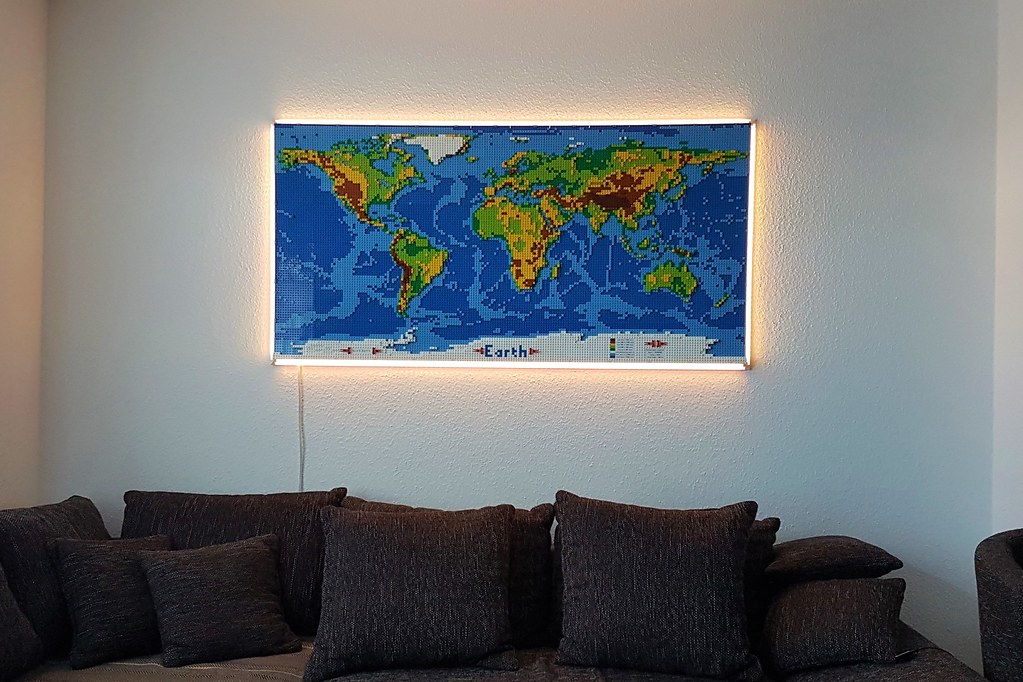
Where it is spoken
Spanish is official in roughly twenty countries, nearly all of them in the Americas plus Spain, along with Equatorial Guinea in Africa. Mexico is by a wide margin the country with the most Spanish speakers in the world.
The interesting case is the United States, where Spanish is not official and yet tens of millions of people speak it. Projections from the Instituto Cervantes Observatory at Harvard suggest that by 2060 it will be the second largest Spanish-speaking country on the planet, behind only Mexico.
A language that gets used, not just studied
A language becomes international when it is useful for working, not only for travelling. Spanish is one of the six official languages of the United Nations and a working language at bodies such as the OAS and the European Union. Online, it holds second place by usage, particularly on social media and content platforms.
| Field | What Spanish opens up |
|---|---|
| Remote work | Clients and teams across Latin America, in your own time zone |
| Health and services in the US | Serving millions of patients and users who prefer Spanish |
| Tourism and hospitality | Twenty Spanish-speaking countries without relying on a translator |
| Culture | Film, music and literature without subtitles or translation |
| Daily life | Paperwork, rentals and friendships when you live in a Spanish-speaking country |
One language, many accents
Spanish has an advantage that is rare among major languages: the variation between countries is a matter of vocabulary and accent, not structure. A Mexican, an Argentinian and a Colombian understand each other effortlessly, even while arguing about what to call the same fruit.
That means the Spanish you learn in one place works everywhere else. What is worth choosing carefully is where to start, because not all accents are equally kind to a new ear.
How long does it take to learn?
The US Foreign Service Institute, which has been training diplomats for decades, places Spanish in its most accessible category for English speakers: between 600 and 750 class hours to reach professional working proficiency. That is among the lowest figures on their entire scale.
In practice, that does not mean a year of one weekly class. It means a sustained pace. Two hours a day over a few months gets you much further than the same total spread across three years, because in the second case a good part of each gain is lost in the gaps.

Learning it where it is spoken
Class hours pay off differently depending on what happens when you leave the room. In a Spanish-speaking country, every errand, every lunch and every lift conversation is extra practice that never appears on the invoice.
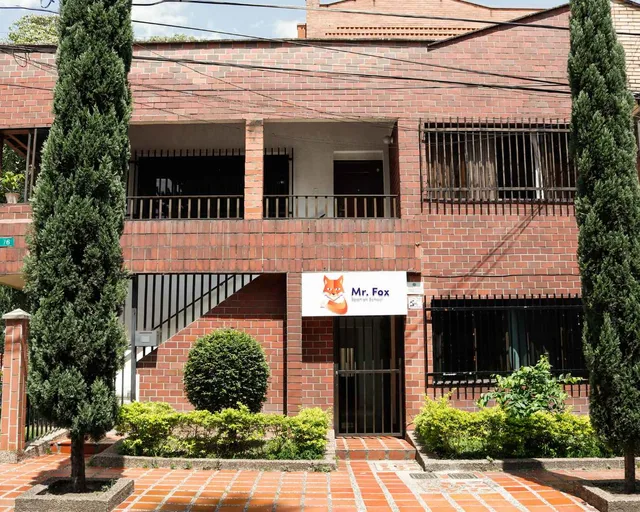
Our campuses are in Medellín, in the Laureles-Estadio neighborhood, and in Pereira, in the heart of the coffee region. Both cities share a useful trait: outside a few tourist areas, English is not the service language, so immersion takes care of itself.
There is also an online format for anyone who wants to start before travelling or keep going after returning home. Plenty of students combine the two and keep the same teacher from beginning to end.
Six hundred million speakers is a statistic. The ten around you every day are what decide your progress.
Where to start
Before choosing a course, it helps to know where you actually stand. A short test and fifteen minutes of conversation are enough to place your real level, which rarely matches the one you think you have, and to work out how many hours a week make sense in your case.
New students then get a 30-minute trial class, with no commitment.
Learn Spanish with us in Colombia
Mister Fox Spanish School is a licensed school (ETDH) with campuses in Pereira and Medellín (Laureles and Belén): small groups, real teachers and a free trial class.
Recent articles
Embrace Your Journey: Overcoming the Top 5 Basic Mistakes in Learning Spanish with Mister Fox Spanish School
The five habits that slow down almost every Spanish learner in Colombia, and what tends to work instead in Medellín and Pereira.
July 30, 2026 · 5 min read
25 Spanish phrases you'll actually use in your first week in Colombia
From ¿Qué más? to a la orden: the phrases you will really hear on day one in Colombia, with translations and tips to use them like a local.
July 2, 2026 · 4 min read
The best time to move to Medellín or Pereira (weather, festivals, timing your course)
Eternal-spring weather, rainy seasons, the Feria de las Flores and visa timelines: how to pick the right month to start your Spanish course in Colombia.
June 25, 2026 · 4 min read